


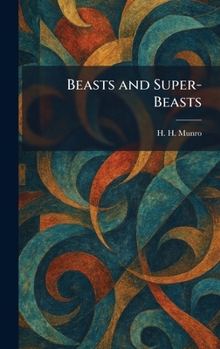
Beasts and Super-Beasts

"Beasts and Super-Beasts" is a definitive collection of short stories by H. H. Munro, known by the pseudonym Saki. This anthology captures the peak of Saki's literary prowess, blending sharp social satire with a touch of the macabre. The narratives within this volume are celebrated for their economy of style, biting wit, and the expert deployment of the unexpected twist.
The stories frequently center on the clash between the rigid constraints of Edwardian society and the unpredictable, often savage, forces of nature. Recurring characters, such as the urbane and mischievous Clovis Sangrail, serve as catalysts for chaos, exposing the vanity and pretension of the British upper class. Whether depicting a house party thrown into disarray by a talking cat or a quiet afternoon disrupted by a misplaced animal, Saki explores the thin line between civilization and the wild.
"Beasts and Super-Beasts" stands as a masterwork of dark humor and ironic observation. It remains a vital contribution to English literature, offering readers a sophisticated and cynical glimpse into a bygone era where the drawing room was often as dangerous as the jungle. This collection is ideal for enthusiasts of classic short fiction and satirical storytelling.
This work has been selected by scholars as being culturally important, and is part of the knowledge base of civilization as we know it. This work was reproduced from the original artifact, and remains as true to the original work as possible. Therefore, you may see the original copyright references, library stamps (as most of these works have been housed in our most important libraries around the world), and other notations in the work.
This work is in the public domain in the United States of America, and possibly other nations. Within the United States, you may freely copy and distribute this work, as no entity (individual or corporate) has a copyright on the body of the work.
As a reproduction of a historical artifact, this work may contain missing or blurred pages, poor pictures, errant marks, etc. Scholars believe, and we concur, that this work is important enough to be preserved, reproduced, and made generally available to the public. We appreciate your support of the preservation process, and thank you for being an important part of keeping this knowledge alive and relevant.
Customer Reviews
ThriftBooks ® and the ThriftBooks ® logo are registered trademarks of Thrift Books Global, LLC
