


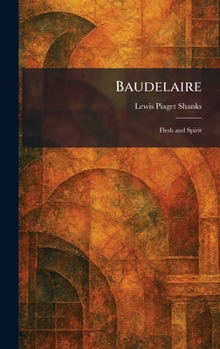
Baudelaire: Flesh and Spirit

Select Format
Select Condition 
Book Overview
"Baudelaire: Flesh and Spirit" is a comprehensive biographical and critical study of Charles Baudelaire, one of the most influential and provocative figures in nineteenth-century French literature. This work delves into the complex dualities that defined Baudelaire's life and artistic output-the eternal struggle between the earthly desires of the "flesh" and the transcendent aspirations of the "spirit."
The book explores the evolution of the poet's genius, from his early years and the publication of the controversial "Les Fleurs du Mal" to his lasting impact on the Symbolist movement. Lewis Piaget Shanks provides a nuanced analysis of Baudelaire's psychological landscape, examining how his personal tribulations, financial struggles, and intense emotional experiences shaped his revolutionary poetic vision. By weaving together biographical detail with literary interpretation, this volume offers readers a deep understanding of the man who bridged the gap between Romanticism and Modernism.
Essential for students of French literature and admirers of classic poetry, "Baudelaire: Flesh and Spirit" remains a significant contribution to the study of a poet whose work continues to haunt and inspire the modern imagination. It captures the essence of a writer who sought beauty in the macabre and paved the way for the future of European verse.
This work has been selected by scholars as being culturally important, and is part of the knowledge base of civilization as we know it. This work was reproduced from the original artifact, and remains as true to the original work as possible. Therefore, you may see the original copyright references, library stamps (as most of these works have been housed in our most important libraries around the world), and other notations in the work.
This work is in the public domain in the United States of America, and possibly other nations. Within the United States, you may freely copy and distribute this work, as no entity (individual or corporate) has a copyright on the body of the work.
As a reproduction of a historical artifact, this work may contain missing or blurred pages, poor pictures, errant marks, etc. Scholars believe, and we concur, that this work is important enough to be preserved, reproduced, and made generally available to the public. We appreciate your support of the preservation process, and thank you for being an important part of keeping this knowledge alive and relevant.
Customer Reviews
ThriftBooks® and the ThriftBooks® logo are registered trademarks of Thrift Books Global, LLC
