


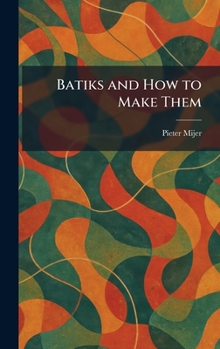
Batiks and How to Make Them

"Batiks and How to Make Them" is a comprehensive guide to the traditional art of batik, offering both historical context and practical instruction for artists and craft enthusiasts. This work provides a detailed exploration of the wax-resist dyeing process, tracing its origins and development while explaining the intricate techniques required to produce high-quality textile designs.
The text covers every stage of production, from the preparation of the cloth and the application of wax to the complex layering of dyes that creates the distinctive batik aesthetic. With a focus on both the aesthetic beauty and the technical precision of the medium, the book serves as an essential resource for those looking to master the tools and materials specific to this Javanese-influenced art form. It bridges the gap between traditional Eastern craftsmanship and Western artistic application, making it a valuable reference for anyone interested in textile arts, fashion design, or decorative history.
This work has been selected by scholars as being culturally important, and is part of the knowledge base of civilization as we know it. This work was reproduced from the original artifact, and remains as true to the original work as possible. Therefore, you may see the original copyright references, library stamps (as most of these works have been housed in our most important libraries around the world), and other notations in the work.
This work is in the public domain in the United States of America, and possibly other nations. Within the United States, you may freely copy and distribute this work, as no entity (individual or corporate) has a copyright on the body of the work.
As a reproduction of a historical artifact, this work may contain missing or blurred pages, poor pictures, errant marks, etc. Scholars believe, and we concur, that this work is important enough to be preserved, reproduced, and made generally available to the public. We appreciate your support of the preservation process, and thank you for being an important part of keeping this knowledge alive and relevant.
Customer Reviews
ThriftBooks® and the ThriftBooks® logo are registered trademarks of Thrift Books Global, LLC
