


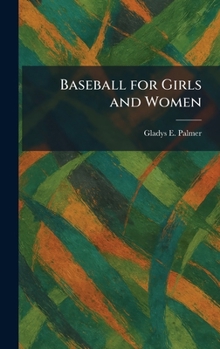
Baseball for Girls and Women

"Baseball for Girls and Women" is a pioneering instructional guide and historical document that explores the development of diamond sports for female athletes during the early 20th century. Written by Gladys E. Palmer, this work provides a comprehensive framework for organizing and playing baseball and its variants, which later evolved into modern softball. At a time when women's participation in competitive team sports was gaining significant momentum, this text served as a foundational resource for physical educators and coaches.
The book details the technical aspects of the game, including pitching techniques, batting form, base running, and fielding strategies tailored specifically for women's programs. Beyond the mechanics of play, Palmer addresses the pedagogical and social importance of athletics, emphasizing the values of teamwork, discipline, and physical health. The work is enriched with tactical diagrams and rule interpretations that reflect the transition of baseball from a recreational pastime to a structured educational discipline.
As an important artifact in the history of women's athletics, "Baseball for Girls and Women" offers unique insights into the evolution of gender roles in sports. It remains a valuable reference for historians of sport, physical education professionals, and anyone interested in the enduring legacy of women on the ball field.
This work has been selected by scholars as being culturally important, and is part of the knowledge base of civilization as we know it. This work was reproduced from the original artifact, and remains as true to the original work as possible. Therefore, you may see the original copyright references, library stamps (as most of these works have been housed in our most important libraries around the world), and other notations in the work.
This work is in the public domain in the United States of America, and possibly other nations. Within the United States, you may freely copy and distribute this work, as no entity (individual or corporate) has a copyright on the body of the work.
As a reproduction of a historical artifact, this work may contain missing or blurred pages, poor pictures, errant marks, etc. Scholars believe, and we concur, that this work is important enough to be preserved, reproduced, and made generally available to the public. We appreciate your support of the preservation process, and thank you for being an important part of keeping this knowledge alive and relevant.
Customer Reviews
ThriftBooks ® and the ThriftBooks ® logo are registered trademarks of Thrift Books Global, LLC
