


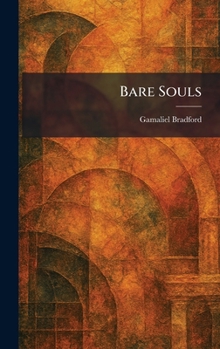
Bare Souls

"Bare Souls" is a masterful collection of psychographic portraits by Gamaliel Bradford, a pioneer in the art of biographical character study. In this compelling work, Bradford delves beneath the surface of historical facts to reveal the inner lives and spiritual essences of several of the world's most influential writers and thinkers. Through careful analysis of their personal letters, diaries, and creative outputs, the author examines the inner temperament and driving forces of figures such as Voltaire, Thomas Gray, Horace Walpole, William Cowper, Charles Lamb, John Keats, Gustave Flaubert, and Edward Fitzgerald.
Bradford's unique method focuses on the recurring patterns of thought and emotion that define a human personality, rather than a mere chronological account of events. By stripping away the external masks of these literary giants, "Bare Souls" offers readers an intimate and profound understanding of the human condition. Each essay serves as a window into the joys, struggles, and contradictions of creative genius. This work remains a significant contribution to literary biography, providing timeless insights into the psychological complexities of some of history's most celebrated authors and their enduring legacies.
This work has been selected by scholars as being culturally important, and is part of the knowledge base of civilization as we know it. This work was reproduced from the original artifact, and remains as true to the original work as possible. Therefore, you may see the original copyright references, library stamps (as most of these works have been housed in our most important libraries around the world), and other notations in the work.
This work is in the public domain in the United States of America, and possibly other nations. Within the United States, you may freely copy and distribute this work, as no entity (individual or corporate) has a copyright on the body of the work.
As a reproduction of a historical artifact, this work may contain missing or blurred pages, poor pictures, errant marks, etc. Scholars believe, and we concur, that this work is important enough to be preserved, reproduced, and made generally available to the public. We appreciate your support of the preservation process, and thank you for being an important part of keeping this knowledge alive and relevant.
Customer Reviews
ThriftBooks ® and the ThriftBooks ® logo are registered trademarks of Thrift Books Global, LLC
