


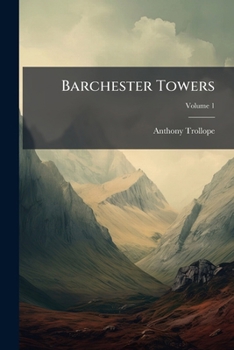
Barchester Towers; Volume 1

Select Format
Select Condition 
Book Overview
"Barchester Towers," the second novel in Anthony Trollope's Chronicles of Barsetshire series, continues the saga of clerical life in the cathedral town of Barchester. Following the death of the old bishop, the arrival of the new bishop and his overbearing wife throws the town into turmoil. Mrs. Proudie's attempts to control the diocese and her husband lead to conflicts with the established clergy, particularly the popular Mr. Slope, whose ambition and manipulative nature threaten the social order.
The novel intricately weaves together the professional rivalries and romantic entanglements of its characters. Eleanor Bold, a wealthy young widow, finds herself pursued by several suitors, including Slope and the charming but indolent Bertie Stanhope. Through witty dialogue and keen observations, Trollope satirizes the social and political maneuverings within the Church of England and the complexities of Victorian society. "Barchester Towers" is a delightful and enduring portrayal of ambition, love, and the foibles of human nature.
This work has been selected by scholars as being culturally important, and is part of the knowledge base of civilization as we know it. This work was reproduced from the original artifact, and remains as true to the original work as possible. Therefore, you will see the original copyright references, library stamps (as most of these works have been housed in our most important libraries around the world), and other notations in the work.
This work is in the public domain in the United States of America, and possibly other nations. Within the United States, you may freely copy and distribute this work, as no entity (individual or corporate) has a copyright on the body of the work.
As a reproduction of a historical artifact, this work may contain missing or blurred pages, poor pictures, errant marks, etc. Scholars believe, and we concur, that this work is important enough to be preserved, reproduced, and made generally available to the public. We appreciate your support of the preservation process, and thank you for being an important part of keeping this knowledge alive and relevant.
Customer Reviews
ThriftBooks ® and the ThriftBooks ® logo are registered trademarks of Thrift Books Global, LLC
