


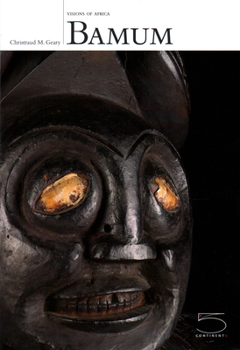
Bamum
No Customer Reviews

-This volume explores the artistic traditions of the Bamum kingdom, the largest and most powerful state in the Cameroon Grassfields In the nineteenth and early twentieth centuries, Bamum court arts flourished when artists working exclusively for the palace created elaborate bead-covered thrones and stools, wooden sculptures, masks in human and animal form, architectural carvings, and fine objects in bronze, ivory, and clay. These vibrant works came to the attention of European museums and collectors after members of a German expedition reached the kingdom in the then German colony Kamerun in 1902 and encountered its youthful king Ibrahim Njoya (ruled 1886/7 to 1931). The book focuses on the history, iconography, and meaning of Bamum royal arts and introduces some of the lesser known art forms that thrived in the kingdom's villages. It also traces the activities of collectors from various backgrounds who were fascinated by the splendor of the royal court. Visual and written sources - including testimony by King Njoya and his courtiers, and extensive records in archives and museums - cast light on the strategies of the monarch who deployed these arts to enhance the kingdom's reputation in distant Europe. With his permission, visitors could acquire many extraordinary objects. The history of Bamum arts thus offers unique perspectives on African creativity and ingenuity, and European ways of collecting.
Format:Paperback
Language:English
ISBN:8874395736
ISBN13:9788874395736
Release Date:September 2011
Publisher:5 Continents Editions
Length:160 Pages
Weight:1.10 lbs.
Dimensions:0.6" x 6.6" x 9.5"
Customer Reviews
0 rating
Copyright © 2026 Thriftbooks.com
Terms of Use | Privacy Policy | Do Not Sell/Share My Personal Information | Cookie Notice | Cookie Preferences | Accessibility Statement
ThriftBooks ® and the ThriftBooks ® logo are registered trademarks of Thrift Books Global, LLC
ThriftBooks ® and the ThriftBooks ® logo are registered trademarks of Thrift Books Global, LLC
