


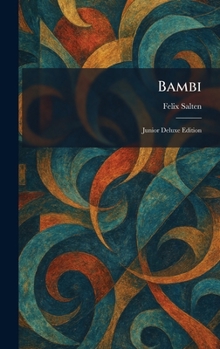
Bambi: Junior Deluxe Edition

"Bambi" is a poignant and evocative coming-of-age story that follows the life of a roe deer from his birth in the heart of the forest to his eventual ascension as the Great Prince. Written by Felix Salten, this classic work of literature explores the beauty and harsh reality of the natural world through the eyes of its animal inhabitants. As Bambi grows from a curious fawn into a majestic buck, he learns valuable lessons about survival, loss, and the cycles of life.
The narrative captures the intricate relationships within the woods, depicting the bond between Bambi and his mother, his friendships with other creatures like Faline and Gobo, and the ever-present danger posed by humans. Salten's masterful prose elevates the animal fable into a profound meditation on the connection between living beings and their environment. "Bambi" remains a timeless masterpiece that resonates with readers of all ages, offering a deep appreciation for the majesty of nature and the resilience of the spirit. This story is not merely a tale for children but a sophisticated exploration of the triumphs and tragedies inherent in the wild.
This work has been selected by scholars as being culturally important, and is part of the knowledge base of civilization as we know it. This work was reproduced from the original artifact, and remains as true to the original work as possible. Therefore, you may see the original copyright references, library stamps (as most of these works have been housed in our most important libraries around the world), and other notations in the work.
This work is in the public domain in the United States of America, and possibly other nations. Within the United States, you may freely copy and distribute this work, as no entity (individual or corporate) has a copyright on the body of the work.
As a reproduction of a historical artifact, this work may contain missing or blurred pages, poor pictures, errant marks, etc. Scholars believe, and we concur, that this work is important enough to be preserved, reproduced, and made generally available to the public. We appreciate your support of the preservation process, and thank you for being an important part of keeping this knowledge alive and relevant.
Customer Reviews
ThriftBooks® and the ThriftBooks® logo are registered trademarks of Thrift Books Global, LLC
