


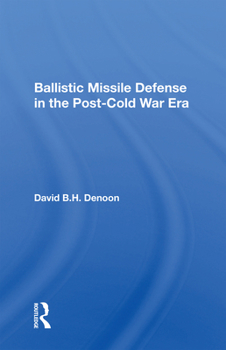
Ballistic Missile Defense in the Post-Cold War Era
No Customer Reviews

With the end of the Cold War and the visibility of U.S. Patriot missile defenses during the 1991 Gulf War, the cost and benefits of ballistic missile defense systems (BMD) need to be re-evaluated. In this detailed and balanced study, David Denoon assesses new types of short-range and intercontinental missile defenses. In the post Cold War era, two fundamental changes have made missile defense for the United States and its military forces more compelling: The United States and Russia no longer see each other as direct threats and there has been a dramatic proliferation of ballistic missile capability in the Third World. Consequently, U.S. forces deployed overseas are more likely to be at risk and, eventually, the United States itself could become vulnerable to missile threats. With these changes in mind, David Denoon analyzes the current BMD dilemma, arguing that active defenses against missiles should be seen as a form of insurance against catastrophe. He assesses the likelihood of missile attacks and the appropriate level of investment for the United States to defend against such attacks. The book provides an assessment of deterrence and the performance of the Patriot missiles during the 1991 Gulf War, critiques the Strategic Defense Initiative, and analyzes the prospects for new types of short-range and intercontinental missile defenses.
Format:Hardcover
Language:English
ISBN:0367017024
ISBN13:9780367017026
Release Date:November 2021
Publisher:Routledge
Length:240 Pages
Customer Reviews
0 rating
Copyright © 2026 Thriftbooks.com
Terms of Use | Privacy Policy | Do Not Sell/Share My Personal Information | Cookie Policy | Cookie Preferences | Accessibility Statement
ThriftBooks ® and the ThriftBooks ® logo are registered trademarks of Thrift Books Global, LLC
ThriftBooks ® and the ThriftBooks ® logo are registered trademarks of Thrift Books Global, LLC
