


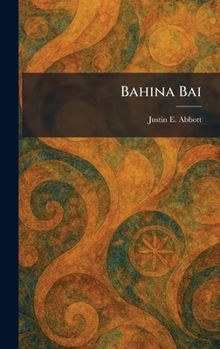
Bahina Bai

"Bahina Bai" offers a profound exploration into the life and spiritual legacy of one of India's most significant female poet-saints. Born in the 17th century, Bahinabai was a devoted disciple of the celebrated saint Tukaram and a vital figure in the Varkari Bhakti movement of Maharashtra. This work focuses on the translation and interpretation of her "abhangas"-devotional verses that capture her intense religious experiences, her struggles as a woman within a traditional social framework, and her unwavering commitment to the deity Vithoba.
Through her verses, Bahinabai provides a rare and intimate look at the intersections of domestic life and radical spiritual devotion. Her poetry is noted for its emotional resonance and philosophical insight, serving as a critical historical record of female religious expression in pre-modern India. This volume, meticulously translated and edited by Justin E. Abbott, serves as an essential resource for readers interested in Hindu devotional traditions, Indian philosophy, and the enduring power of mystical literature. The text highlights Bahinabai's unique voice, ensuring her contributions to the Bhakti tradition remain accessible to a global audience.
This work has been selected by scholars as being culturally important, and is part of the knowledge base of civilization as we know it. This work was reproduced from the original artifact, and remains as true to the original work as possible. Therefore, you may see the original copyright references, library stamps (as most of these works have been housed in our most important libraries around the world), and other notations in the work.
This work is in the public domain in the United States of America, and possibly other nations. Within the United States, you may freely copy and distribute this work, as no entity (individual or corporate) has a copyright on the body of the work.
As a reproduction of a historical artifact, this work may contain missing or blurred pages, poor pictures, errant marks, etc. Scholars believe, and we concur, that this work is important enough to be preserved, reproduced, and made generally available to the public. We appreciate your support of the preservation process, and thank you for being an important part of keeping this knowledge alive and relevant.
Customer Reviews
ThriftBooks® and the ThriftBooks® logo are registered trademarks of Thrift Books Global, LLC
