


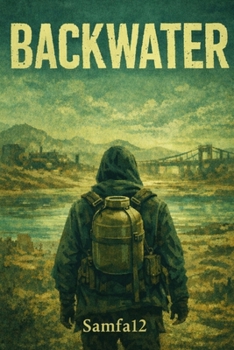
Backwater

Backwater is a literary post-apocalyptic novel set in a water-scarce world where survival depends on what a person can carry, protect, and choose to give away.
Generations after an undefined global collapse, the landscape has settled into something quieter but no less fragile. Water is scarce, distances are long, and small communities endure through routine, restraint, and careful balance. At the centre of the novel is a lone water carrier who travels between a distant source and a settlement that depends on him. His work is simple, physical, and necessary. Each journey is shaped by weight, exhaustion, and the constant risk of failure.
The world of Backwater is not driven by chaos or spectacle, but by attrition. There are no monsters and no clear villains. Instead, pressure builds through repetition, scarcity, and the slow erosion of stability. As access to water becomes less certain, the balance between neighbouring settlements begins to shift. The carrier, positioned between them, becomes the point where these tensions surface.
When routine breaks, the consequences are immediate. A disrupted journey reveals how fragile the system has become, forcing difficult decisions about responsibility, survival, and fairness. The possibility of taking what is needed emerges alongside the recognition that no group can endure alone.
Rather than moving toward domination or collapse, Backwater explores uneasy cooperation as an alternative. Its resolution is not clean or certain, but grounded in the reality that survival in a limited world must eventually be shared.
Restrained in tone and deliberate in pacing, Backwater is a character-driven novel that examines endurance, consequence, and the limits of self-sufficiency. It presents a world shaped by loss, but defined by the choices that remain.
Customer Reviews
ThriftBooks ® and the ThriftBooks ® logo are registered trademarks of Thrift Books Global, LLC
