


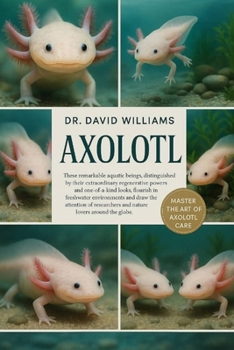
Axolotl

Introduction to Axolotls
What is an Axolotl?
The axolotl (Ambystoma mexicanum) is a unique species of amphibian belonging to the salamander family.
It is largely notable for its capacity to stay in a larval state throughout its life, a trait known as neoteny.
While most amphibians undergo a dramatic change from aquatic larvae to terrestrial adults, the axolotl preserves its juvenile, aquatic form, complete with exposed gills and a tail.
This distinguishes the axolotl distinct from many other organisms in the amphibian world.
Typically, axolotls are roughly 9 to 12 inches long, with a soft, elongated body and a wide, flat head.
Their skin is moist and silky, and they occur in many hues, from the wild-type brown with black markings to leucistic (pale pink) and golden albino forms.
What actually defines axolotls are their external gills, which protrude from the sides of their heads like feathers.
These gills are utilized to obtain oxygen from the water, since axolotls depend more on gills for breathing than lungs. In addition to their gills, axolotls have a lengthy tail, which they utilize for swimming and balancing.
Axolotls are carnivorous and eat a range of tiny food, including worms, small fish, and even other smaller amphibians.
They utilize their strong jaws to collect and swallow food, and their comparatively low metabolism makes them an easy animal to care for in captivity.
One of the most impressive qualities of axolotls is their regenerating abilities.
These critters can regenerate missing body parts, including limbs, spinal cord segments, heart tissue, and even sections of their brain.
This amazing ability for regeneration has made them a topic of scientific investigation, as researchers attempt to discover the secrets of their regenerative process for possible medicinal uses.
A Brief History of the Axolotl
The axolotl has a long history, notably in Mexico, where it is endemic to the lakes around Mexico City, including the historic Lake Xochimilco.
In the wild, axolotls previously flourished in these lakes, thriving in shallow, muddy waters with plentiful flora.
However, as Mexico City developed and urbanized over the ages, the axolotl's natural environment has been badly damaged by pollution, habitat loss, and the invasion of non-native species.
Today, the axolotl is considered severely endangered in the wild, with populations limited to a tiny section of the Xochimilco lake system.
Despite their diminishing numbers in the wild, axolotls were first brought to scientific notice in the early 19th century.
They were immediately discovered for their regeneration qualities and became a topic of curiosity for scholars and naturalists alike.
Early research in Europe and the United States helped establish the axolotl as a model organism for understanding regeneration and developmental biology.
Over time, axolotls were also taken into captivity, where they prospered and were bred for scientific studies.
Their regenerative qualities make them suitable for use in labs researching tissue growth, cellular regeneration, and developmental processes.
Customer Reviews
ThriftBooks® and the ThriftBooks® logo are registered trademarks of Thrift Books Global, LLC
