
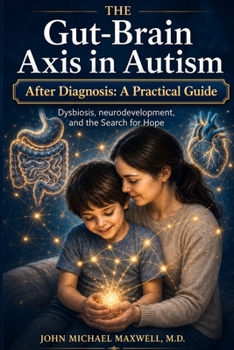
What if the gut is not a side issue in autism-but one of the most important conversations families and clinicians need to have?
In The Gut-Brain Axis in Autism: Dysbiosis, Neurodevelopment, and the Search for Hope, Dr. John Michael Maxwell brings together the urgency of a father and the careful reasoning of a physician to explore one of the most compelling questions in autism research: could gut dysbiosis, intestinal inflammation, microbial metabolites, nutrient imbalance, sleep disruption, and gastrointestinal distress play a powerful role in autism-related symptoms for some children?
Written after the author's own son was diagnosed with Level Three autism, this book is more than a scientific review. It is a deeply personal, evidence-aware journey through the biology, uncertainty, frustration, and hope that many families face after an autism diagnosis.
Dr. Maxwell presents a dysbiosis-centered framework that connects the gut microbiome to the developing brain through pathways involving intestinal permeability, immune activation, oxidative stress, mitochondrial strain, neurotransmitter disruption, nutrient depletion, and microbial metabolites. Rather than offering false certainty or promising a cure, the book carefully distinguishes established evidence, emerging science, and investigational ideas-giving readers a thoughtful roadmap through a complex and often confusing field.
Inside, readers will discover:
A clear explanation of the gut-brain axis in autism
Understand how microbial imbalance, gastrointestinal symptoms, inflammation, sleep problems, feeding restriction, and communication readiness may be connected.
A balanced review of promising and controversial interventions
Explore probiotics, Lactobacillus reuteri, leucovorin, fecal microbiota transfer, hyperbaric oxygen, stem cell therapy, MeRT/TMS, zeolite, detox products, biomarkers, diet, fermented foods, and more-with caution, context, and practical perspective.
A practical roadmap for families and clinicians
Learn how to organize the first six months after diagnosis, prepare for medical visits, track symptoms, evaluate tests and supplements, support communication, address sleep and feeding challenges, and avoid the common mistake of changing too many things at once.
A compassionate message for parents of non-speaking or struggling children
This book reminds families that behavior may sometimes be a child's only way of communicating pain, discomfort, overload, or unmet needs-and that progress often begins with careful observation, patience, and connection.
A hopeful but honest path forward
Dr. Maxwell encourages families to pursue early developmental support, speech-language therapy, AAC when needed, symptom-driven medical evaluation, and sustainable routines-while never losing sight of the child's dignity, potential, and humanity.
Both scientific and heartfelt, The Gut-Brain Axis in Autism is for parents, caregivers, clinicians, and anyone searching for a deeper understanding of autism beyond labels alone. It does not replace medical care, and it does not claim that one pathway explains every child. Instead, it invites readers to ask better questions, look more carefully, protect hope from false promises, and recognize that meaningful progress may begin when the body, brain, gut, communication, and family environment are considered together.
For every family that has been told "there is nothing more to do," this book offers something different: curiosity, caution, practical direction, and hope.
