


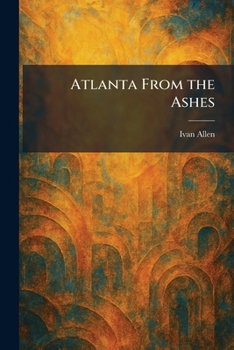
Atlanta From the Ashes

"Atlanta From the Ashes" provides a compelling historical overview of the city of Atlanta's remarkable transformation following its near-total destruction during the American Civil War. Written by Ivan Allen, a prominent figure in the city's civic and commercial life, this work details the resilience and strategic planning that allowed a smoldering ruin to evolve into a bustling metropolis and the "Gate City" of the South.
The narrative explores the critical decades of the late 19th and early 20th centuries, highlighting the infrastructure developments, economic shifts, and civic leadership that defined the city's identity. Allen offers insights into the spirit of progress that characterized the New South movement, documenting how Atlanta leveraged its geographic position to become a center for trade and industry. This volume serves as an essential record for readers interested in urban history, Southern heritage, and the sociological impact of post-war reconstruction. By examining the period between the 1860s and the late 1920s, the work captures a pivotal era in American history where a community rebuilt itself through sheer determination and vision.
This work has been selected by scholars as being culturally important, and is part of the knowledge base of civilization as we know it. This work was reproduced from the original artifact, and remains as true to the original work as possible. Therefore, you may see the original copyright references, library stamps (as most of these works have been housed in our most important libraries around the world), and other notations in the work.
This work is in the public domain in the United States of America, and possibly other nations. Within the United States, you may freely copy and distribute this work, as no entity (individual or corporate) has a copyright on the body of the work.
As a reproduction of a historical artifact, this work may contain missing or blurred pages, poor pictures, errant marks, etc. Scholars believe, and we concur, that this work is important enough to be preserved, reproduced, and made generally available to the public. We appreciate your support of the preservation process, and thank you for being an important part of keeping this knowledge alive and relevant.
Customer Reviews
ThriftBooks ® and the ThriftBooks ® logo are registered trademarks of Thrift Books Global, LLC
