


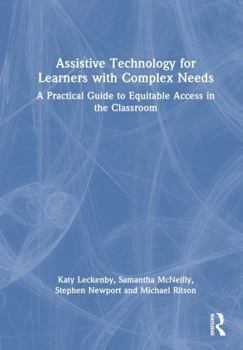
Assistive Technology for Learners with Complex Needs: A Practical Guide to Equitable Access in the Classroom
No Customer Reviews

This book guides you in identifying needs and key considerations for introducing assistive technology (AT) to learners and classrooms. Essential reading for SENCOs, teachers, and leaders, it offers valuable insights to enhance AT use, opening up access to the curriculum for learners with complex needs.
Format:Hardcover
Language:English
ISBN:1041071930
ISBN13:9781041071938
Release Date:September 2026
Publisher:Routledge
Length:210 Pages
Customer Reviews
0 rating
Copyright © 2026 Thriftbooks.com
Terms of Use | Privacy Policy | Do Not Sell/Share My Personal Information | Cookie Policy | Cookie Preferences | Accessibility Statement
ThriftBooks ® and the ThriftBooks ® logo are registered trademarks of Thrift Books Global, LLC
ThriftBooks ® and the ThriftBooks ® logo are registered trademarks of Thrift Books Global, LLC
