


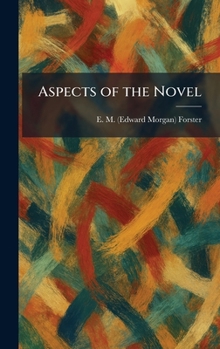
Aspects of the Novel

Select Format
Select Condition 
Book Overview
"Aspects of the Novel" is a seminal work of literary criticism that explores the fundamental components of narrative fiction. Based on a series of influential lectures delivered at Cambridge University, E. M. Forster provides an engaging and deeply perceptive analysis of what makes a novel successful. Rather than focusing on a chronological history, Forster organizes his examination around seven key elements: story, people, plot, fantasy, prophecy, pattern, and rhythm.
Perhaps most famous for introducing the distinction between "flat" and "round" characters, this work offers profound insights into the mechanics of storytelling. Forster evaluates the works of numerous authors, demonstrating how the interplay of character and plot creates a resonance that lingers with the reader. His approach is both scholarly and personal, reflecting his own experiences as a celebrated novelist.
Timeless in its observations, "Aspects of the Novel" serves as an essential guide for students, writers, and anyone passionate about literature. It remains one of the most accessible and important texts on the craft of fiction, providing a framework for understanding how stories are constructed and why they continue to captivate the human imagination.
This work has been selected by scholars as being culturally important, and is part of the knowledge base of civilization as we know it. This work was reproduced from the original artifact, and remains as true to the original work as possible. Therefore, you may see the original copyright references, library stamps (as most of these works have been housed in our most important libraries around the world), and other notations in the work.
This work is in the public domain in the United States of America, and possibly other nations. Within the United States, you may freely copy and distribute this work, as no entity (individual or corporate) has a copyright on the body of the work.
As a reproduction of a historical artifact, this work may contain missing or blurred pages, poor pictures, errant marks, etc. Scholars believe, and we concur, that this work is important enough to be preserved, reproduced, and made generally available to the public. We appreciate your support of the preservation process, and thank you for being an important part of keeping this knowledge alive and relevant.
Customer Reviews
Nothing Else Like It
wonderful insights from a great British novelist
Marvelous thugh loosely structured reflections on the novel
better than his novels
A Must Read for Everyone
ThriftBooks® and the ThriftBooks® logo are registered trademarks of Thrift Books Global, LLC
