


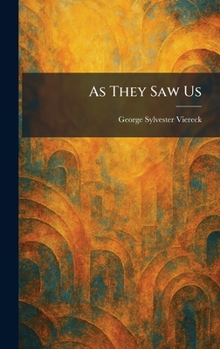
As They Saw Us

"As They Saw Us" is a compelling examination of the United States' role in the Great War from the distinct perspectives of European military and political leaders. Author George Sylvester Viereck compiles a series of accounts and interviews that reveal how the major powers-both allies and former adversaries-viewed the sudden and decisive intervention of the American Expeditionary Forces on the Western Front.
The work provides a rare glimpse into the strategic assessments of high-ranking figures, exploring their candid opinions on American military prowess, industrial might, and diplomatic influence during the conflict. By bridging the gap between American self-perception and European reality, the book offers a nuanced look at the geopolitical landscape of the early 20th century. It delves into the cultural clashes and mutual admirations that arose when the Old World met the New on the battlefields of France.
"As They Saw Us" remains an essential resource for students of military history and international relations, capturing a transformative moment in global history when the United States emerged as a preeminent world power. This work serves as both a historical record and a psychological study of international perception during one of humanity's most tumultuous eras, emphasizing the profound impact of the American soldier on the global stage.
This work has been selected by scholars as being culturally important, and is part of the knowledge base of civilization as we know it. This work was reproduced from the original artifact, and remains as true to the original work as possible. Therefore, you may see the original copyright references, library stamps (as most of these works have been housed in our most important libraries around the world), and other notations in the work.
This work is in the public domain in the United States of America, and possibly other nations. Within the United States, you may freely copy and distribute this work, as no entity (individual or corporate) has a copyright on the body of the work.
As a reproduction of a historical artifact, this work may contain missing or blurred pages, poor pictures, errant marks, etc. Scholars believe, and we concur, that this work is important enough to be preserved, reproduced, and made generally available to the public. We appreciate your support of the preservation process, and thank you for being an important part of keeping this knowledge alive and relevant.
Customer Reviews
ThriftBooks® and the ThriftBooks® logo are registered trademarks of Thrift Books Global, LLC
