


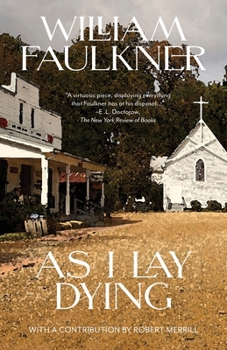
As I Lay Dying (Warbler Classics Annotated Edition)

First published in 1930, As I Lay Dying traces the Bundren family's difficult journey to fulfill the wish of their dying matriarch, Addie. Told through a sequence of interior monologues, the novel unfolds in multiple voices, revealing conflicting motives, private grief, and the uneasy bond that holds the family together. Faulkner's style-fragmented, intimate, and unguarded-captures the texture of thought itself, shifting between dark humor and quiet despair. The result is a work that examines how people make meaning from obligation, death, and estrangement, and how language both connects and isolates them. Now regarded as a defining work of twentieth-century fiction, As I Lay Dying remains compelling for its precise attention to voice and its unsentimental view of human endurance.
Customer Reviews
ThriftBooks ® and the ThriftBooks ® logo are registered trademarks of Thrift Books Global, LLC
