


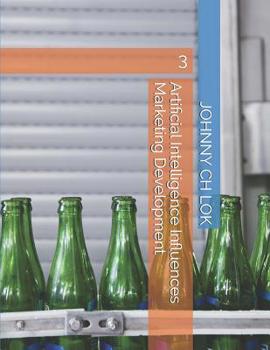
Artificial Intelligence Influences Marketing Development: 3
No Customer Reviews

How do you think Procter & Gamble has been able to increase its market share at a time when competition from supermarkets' own-label brands has intensified?(AI) can help it to gather data concerns that what are the factors to cause it's brand can build large market share in short time. Then, it can concentrate on keep it's internal strengths and attack it's internal weaknesses or attack it's external threats and keep it's external opportunities in ord ero keep its competitive effort in market long term.Procter & Gamble operates mainly low value consume products, such as household detergents are among the most competitive and building successful brand is key to long term profitability. Differentiating one product from another in the minds of consumers can be extremely difficult, with one packet of detergent looking very much like another and performing similarly. It seems that it can not be unique to sell in supermarket. However, then it innovated new liquid soap products, it seemed to adopt to change in consumer preference, and maintaining consistent standards when exploiting new market opportunities. Adrian, P. 2012) showed that Fairy liquid was rated as Britain's number one cleaning brand by Marketing magazine and in 2010 accounted for 3 percent share of the UK washing up liquid category by value. The brand has been a regular household feature since the name first appeared in 1898 year on a bar of soap. P&G first launched Fairy liquid in the UK market I think Procter & Gamble (P&G) has this marketing strategy to supply its soap products to supermarket retailers. A supermarket is not only supply to likely to encounter a massive range of products, such as food, drink, homecare, personal care, luxury products etc. Consumers can see categories and see how much the offering changes, the range, the packaging, the branding and advertising or promotion of any brand products sale at shelves. Hence, such as P&G manufacturer in 1960 year. At the same time, the market for washing up products was still in its infancy, with most consumers using solid soaps, and only 17 per cent of households using liquid soap. But P&G gained most from a change in consumers' habits. It educated the public of the benefits of using washing up liquid. The launch of Fairy liquid soap products involved distributing 15 million trial bottles to about 85 per cent of household in the UK. Creating early awareness and trial of the Fairy liquid soap innovative products led to Fairy gaining a market share of 27 per cent by 1969 year. It had a proud positioning as a slightly more expensive product which is better value and worth. So, it created brand values of a soft, caring, homely image by advertisement promotion. It also attempted to adopt in response to changing attitudes, for example, a commercial in 1994 year for the first time used a father instead of a mother at the kitchen sink. During the first twenty years of the brand's life, product innovation had been relatively modest. However, an increasing competitive market, customers have forced P&G to innovate in order to maintain and strength its market share.
Format:Paperback
Language:English
ISBN:1070763853
ISBN13:9781070763859
Release Date:January 1
Publisher:Independently Published
Length:400 Pages
Weight:2.82 lbs.
Dimensions:1.0" x 8.5" x 11.0"
Customer Reviews
0 rating
Copyright © 2026 Thriftbooks.com Terms of Use
| Privacy Policy | Do Not
Sell/Share My Personal Information | Cookie Policy | Cookie Preferences | Accessibility Statement
ThriftBooks® and the ThriftBooks® logo are registered trademarks of Thrift Books Global, LLC
ThriftBooks® and the ThriftBooks® logo are registered trademarks of Thrift Books Global, LLC
