


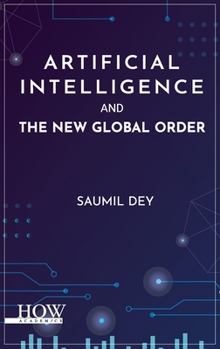
Artificial Intelligence and the New Global Order

Artificial Intelligence (AI) has emerged as one of the most influential forces shaping the contemporary world, transforming economies, redefining governance, and altering the dynamics of international relations. Its rapid advancement presents unprecedented opportunities for innovation, productivity, and social development, while simultaneously raising critical questions concerning ethics, accountability, security, and global inequality.
This book seeks to examine the multifaceted dimensions of artificial intelligence through technological, economic, political, and geopolitical perspectives. It explores the challenges associated with AI adoption, the importance of responsible development, and the need for effective governance frameworks capable of addressing its far-reaching implications. Particular attention is devoted to international technological competition and the evolving relationship between AI capabilities, national interests, and global strategic influence.
As countries increasingly recognise AI as a driver of economic growth and geopolitical power, international cooperation becomes essential to ensure that its benefits are widely shared and its risks effectively managed. Establishing common principles, strengthening institutional capacities, and promoting ethical innovation are crucial steps towards building a trustworthy AI ecosystem.
This volume is intended for academics, researchers, policymakers, students, and professionals seeking a deeper understanding of AI's evolving role in global affairs. It is hoped that the discussions presented here will encourage informed debate and contribute to a more responsible, inclusive, and sustainable technological future.
Customer Reviews
ThriftBooks ® and the ThriftBooks ® logo are registered trademarks of Thrift Books Global, LLC
