


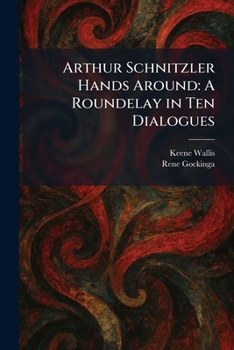
Arthur Schnitzler Hands Around: A Roundelay in Ten Dialogues

"Hands Around" is a provocative and structurally innovative play by the renowned Austrian dramatist Arthur Schnitzler. Set in fin-de-si cle Vienna, the work consists of ten interlocking dialogues that explore the complexities of human desire, social hierarchy, and the fragile nature of intimacy. The narrative follows a unique "roundelay" structure: character A meets character B, character B then meets character C, and the chain continues until the final scene brings the cycle back to the beginning.
Through this sequence of encounters-ranging from soldiers and parlor maids to poets and aristocrats-Schnitzler masterfully peels back the layers of Viennese society. The play serves as a biting satire on the sexual mores and class distinctions of its time, highlighting the universal yet isolating nature of physical connection. Celebrated for its psychological depth and modern sensibility, "Hands Around" remains a landmark of 20th-century European literature. This edition captures the rhythmic wit and cynical charm of the original work, offering readers a window into the decadent and often hypocritical world of early modern society.
This work has been selected by scholars as being culturally important, and is part of the knowledge base of civilization as we know it. This work was reproduced from the original artifact, and remains as true to the original work as possible. Therefore, you may see the original copyright references, library stamps (as most of these works have been housed in our most important libraries around the world), and other notations in the work.
This work is in the public domain in the United States of America, and possibly other nations. Within the United States, you may freely copy and distribute this work, as no entity (individual or corporate) has a copyright on the body of the work.
As a reproduction of a historical artifact, this work may contain missing or blurred pages, poor pictures, errant marks, etc. Scholars believe, and we concur, that this work is important enough to be preserved, reproduced, and made generally available to the public. We appreciate your support of the preservation process, and thank you for being an important part of keeping this knowledge alive and relevant.
Related Subjects
DramaCustomer Reviews
ThriftBooks ® and the ThriftBooks ® logo are registered trademarks of Thrift Books Global, LLC
