


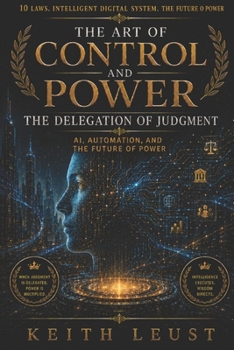
The Art of Control and Power: The Delegation of Judgement

Artificial intelligence is often described as a technology story. But it is also a power story.
In The Art of Control and Power: The Delegation of Judgment, Keith Leust examines how the Ten Laws of Control and Power evolve as artificial intelligence, automation, robotics, data systems, and digital platforms become embedded in civilization. These systems no longer simply assist human beings. They recommend, rank, predict, generate, monitor, automate, and increasingly shape decisions.
This book explores how ancient patterns of power-advantage, dependency, information control, emotional influence, crisis, adaptation, and hidden authority-are entering intelligent systems. Human knowledge is being separated from human beings, embedded into infrastructure, and scaled through systems that may be owned, monetized, trusted, or concealed before society has fully decided who is responsible for them.
This is not a prediction of the future or a technical deep dive into artificial intelligence. It is a framework for awareness and dialogue.
The central question is urgent: which judgments can machines assist, which may be delegated, which must remain human, and which must never be hidden inside systems no one can question?
The future is not yet written. Human beings are still the authors.
Customer Reviews
ThriftBooks ® and the ThriftBooks ® logo are registered trademarks of Thrift Books Global, LLC
