


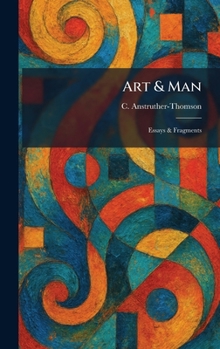
Art & Man: Essays & Fragments

The book brings together diverse reflections on the nature of artistic creation and the psychological underpinnings of taste. The author's unique approach emphasizes the concept of aesthetic empathy, offering a bridge between the technical aspects of art history and the lived experience of the observer. Through keen observations on line, color, and structure, the text invites readers to reconsider their own physical responses to visual masterpieces. This volume serves as a vital contribution to early 20th-century art theory, blending intellectual rigor with a deep, intuitive appreciation for the aesthetic world. It remains an essential read for those interested in the philosophy of art and the history of art criticism.
This work has been selected by scholars as being culturally important, and is part of the knowledge base of civilization as we know it. This work was reproduced from the original artifact, and remains as true to the original work as possible. Therefore, you may see the original copyright references, library stamps (as most of these works have been housed in our most important libraries around the world), and other notations in the work.
This work is in the public domain in the United States of America, and possibly other nations. Within the United States, you may freely copy and distribute this work, as no entity (individual or corporate) has a copyright on the body of the work.
As a reproduction of a historical artifact, this work may contain missing or blurred pages, poor pictures, errant marks, etc. Scholars believe, and we concur, that this work is important enough to be preserved, reproduced, and made generally available to the public. We appreciate your support of the preservation process, and thank you for being an important part of keeping this knowledge alive and relevant.
Customer Reviews
ThriftBooks ® and the ThriftBooks ® logo are registered trademarks of Thrift Books Global, LLC
