


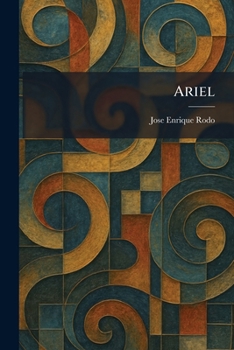
Ariel

Select Format
Select Condition 
Book Overview
"Ariel" is a foundational work of Latin American thought and one of the most influential essays in the history of the region. Written by the Uruguayan philosopher and writer Jos Enrique Rod 3, this masterpiece addresses the youth of America, urging them to cultivate a sense of spiritual and cultural excellence in the face of growing materialist influences. Drawing inspiration from Shakespeare's "The Tempest", Rod 3 uses the figure of Ariel to symbolize the noble, idealistic, and artistic spirit of Latin American culture, contrasting it with Caliban, who represents the utilitarian and pragmatic tendencies often associated with Northern industrial societies.
The essay serves as a call to action for intellectual and moral development, advocating for a balance between material progress and the preservation of humanistic values. Rod 3 explores themes of democracy, education, and the unique identity of the Hispanic world, providing a philosophical framework that shaped generations of Latin American thinkers and politicians. As a pivotal text of "Arielism," this work remains a vital study of cultural identity and the tension between idealism and materialism in the modern world. Its timeless message continues to resonate as a powerful defense of the arts, intellect, and the pursuit of a higher spiritual purpose.
This work has been selected by scholars as being culturally important, and is part of the knowledge base of civilization as we know it. This work was reproduced from the original artifact, and remains as true to the original work as possible. Therefore, you may see the original copyright references, library stamps (as most of these works have been housed in our most important libraries around the world), and other notations in the work.
This work is in the public domain in the United States of America, and possibly other nations. Within the United States, you may freely copy and distribute this work, as no entity (individual or corporate) has a copyright on the body of the work.
As a reproduction of a historical artifact, this work may contain missing or blurred pages, poor pictures, errant marks, etc. Scholars believe, and we concur, that this work is important enough to be preserved, reproduced, and made generally available to the public. We appreciate your support of the preservation process, and thank you for being an important part of keeping this knowledge alive and relevant.
Customer Reviews
The reason to understand latin america failure in XX century
Una lectura de reflexion
tremendo trabajo, aun vigente
This book makes you think about American values and culture.
ThriftBooks® and the ThriftBooks® logo are registered trademarks of Thrift Books Global, LLC
