


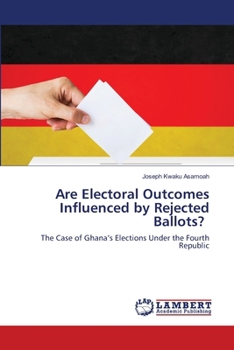
Are Electoral Outcomes Influenced by Rejected Ballots?
No Customer Reviews

Elections have become the prerequisite of democratic governance in most countries. In pursuit of this democratic imperative, Ghana has conducted eight (8) successive elections since the inception of the Fourth Republic. In the quest to seek continuous improvement, the Election Management Body of Ghana has over the years implemented various policies to give citizens the right to vote to choose leaders. However, notwithstanding the relentless effort to improve the electoral process, the incidence of rejected ballots poses risk to the democratic value of elections. The quantum of rejected ballots sometimes is enough to push the elections into a runoff. Apart from the financial and economic costs to the nation, runoff elections birthed by rejected ballots create tensions and anxiety with the tendency to threaten the peace and security of countries. Consequently, the main causes and effects of rejected ballots on the democratic value of elections have eluded the voting public. This study aims to evince the possible cause of rejected ballots and narrow the knowledge gap of its impact on Ghana's democracy by adopting descriptive analysis to assess the democratic peril of high incidence.
Format:Paperback
Language:English
ISBN:6207463102
ISBN13:9786207463107
Release Date:January 1
Publisher:LAP Lambert Academic Publishing
Length:56 Pages
Weight:0.21 lbs.
Dimensions:0.1" x 6.0" x 9.0"
Customer Reviews
0 rating
Copyright © 2026 Thriftbooks.com Terms of Use
| Privacy Policy | Do Not
Sell/Share My Personal Information | Cookie Policy | Cookie Preferences | Accessibility Statement
ThriftBooks® and the ThriftBooks® logo are registered trademarks of Thrift Books Global, LLC
ThriftBooks® and the ThriftBooks® logo are registered trademarks of Thrift Books Global, LLC
