


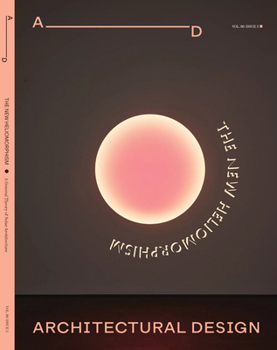
Architectural Design 96.3: The New Heliomorphism: A General Theory of Solar Architecture

On the role of solar orientation and thermal energy within the architecture of the Anthropocene
How might architecture be reshaped by cascading flows of ambient energy, through solar fluxes and thermal gradients, linked to biogenic growing cycles? This issue of Architectural Design examines the relations among three progressive practices that have emerged in contemporary architecture over the past decade: critical solar performance, thermal self-regulation and circular economies of biogenic materials. The New Heliomorphism proposes a unifying theory to reconcile the contradictions within and between these distinct modes of spatial projection and their implications for contemporary practice. The issue features contributions from leading voices across three thematic modes of ecologically informed practice: biopolitics and critical solar performance; thermal gradients and thermodynamic sections; and biogenic materials after extraction.
Contributors include: I aki balos, Michelle Addington, Fatma Al-Alawi, Lola Ben-Alon, Daniel Barber, Paul Bouet, Carl D'Apolito-Dworkin, Kelly Alvarez Doran, Dorit Aviv, Javier Garc a-Germ n, Daniel Iba ez, Aleksandra Jaeschke, Paul Lewis, David J. Lewis, John May, Kiel Moe, Jenny Sabin, Thomas Schroepfer, Renata Sentkiewicz, Ashley Simone, Marc Tsurumaki, Emmett Zeifman.
Related Subjects
ArchitectureCustomer Reviews
ThriftBooks ® and the ThriftBooks ® logo are registered trademarks of Thrift Books Global, LLC
