


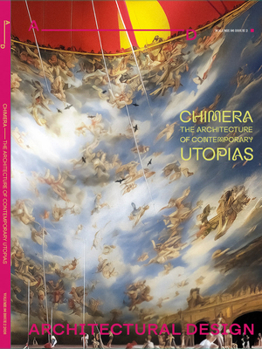
Architectural Design 96.2: Chimera: The Architecture of Contemporary Utopias

A timely issue of Architectural Design that positions architecture's project as world-construction
Fifty years ago, architects imagined worlds to come. Today, many have ceded the future to market logic, treating global capitalism as inevitable and reality as fixed. This issue of Architectural Design argues that when collective imagination falters, the utopian impulse returns--not as a blueprint for perfection, but as a vital means of reopening what can still be conceived and made. As planetary computation, climate instability and synthetic cognition converge, utopia becomes a tool for speculative world?building: a way to design new systems, realities and relationalities with the more-than-human. Contributors navigate this shifting terrain from a range of vantages--from those who embrace technological acceleration as an instrument of renewal to others whose address to futurity is aimed at resisting the exhausted capitalist logics of the present. Across these positions, utopia emerges as an operative framework for projecting alternative futures and expanding our sense of the possible. Here, architecture's task is not merely to shape space, but to construct worlds capacious enough to hold complexity--and to sustain coexistence amid crisis.
Contributors include: Archigram, Adil Bokhari, Federico Campagna, Robert Cha, Jennifer Chen, John Cooper, Diller Scofidio + Renfro, Krish Dittmer, Peter Eisenman & Michael Graves, Graham Harman, Damjan Jovanovic, Rem Koolhaas, Neil Leach, Elena Manferdini, Alina Nazmeeva, Antoine Picon, Carlo Ratti, Marco Santambrogio, Paulette Singley, Neil Spiller, Superstudio, Natasha Wanganeen, Andrew Witt, Rain Wu, Liam Young, Elia Zenghelis.
Related Subjects
ArchitectureCustomer Reviews
ThriftBooks ® and the ThriftBooks ® logo are registered trademarks of Thrift Books Global, LLC
