


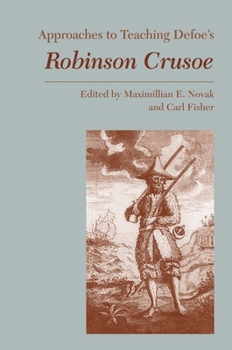
Approaches to Teaching Defoe's Robinson Crusoe

Select Format
Select Condition 
Book Overview
Long a centerpiece of eighteenth-century literary studies and a significant influence on the fiction of its day, Defoe's Robinson Crusoe remains a standard text for teaching the period and continues to inspire popular adaptations and imitations, from children's books to adventure films to reality TV. In teaching the work, instructors are challenged to separate the popular images of Crusoe from the text and its two sequels, creating distance from the myth without losing sight of why it is so powerful. Students need guidance in recognizing the way the novel blends genres--romance, travel tale, spiritual biography, diary, economic and political allegory--and in judging the character of Crusoe, a topic that has elicited much scholarly debate. The essays in this volume offer classroom tested strategies that address these and many other concerns.
Part 1, "Materials," describes the novel's publishing history, its critical reputation, its fictional predecessors, and its stature as an international text. It also surveys modern editions, scholarly biographies, and relevant Web sites and provides a brief biography of Defoe. Essays in part 2, "Approaches," focus on genres such as travel writing and conduct books; consider how ideas about individualism, education, science, masculinity, and race helped shape Defoe's trilogy; trace the themes of the colonial experience in castaway narratives and Robinsonades; and show how the Crusoe story unfolds in later periods, in J. M. Coetzee's Foe, Derek Walcott's poetry, children's literature, and film.
Customer Reviews
ThriftBooks ® and the ThriftBooks ® logo are registered trademarks of Thrift Books Global, LLC
