


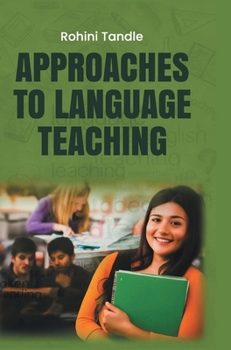
Approaches to Language Teaching
No Customer Reviews

Over the last hundred years, language instruction has been reshaped by shifting ideas about how individuals learn, interpret, and employ language. Initially, teaching hinged on the grammar-translation model, which prioritized rule memorization and direct translation, treating language as a subject for examination rather than for exchange. With growing demand for real-world communication skills, educators began to emphasize learners' ability to interact naturally, placing value on using language authentically. This evolution led to methods that regard students as engaged constructors of knowledge, learning through collaboration, problem-solving activities, and genuine tasks. Recognizing that learning unfolds within social contexts, these approaches have broadened the definition of effective language teaching to embrace not only correctness but also fluency, contextual understanding, and strategic use. This title, Approaches to Language Teaching, presents a comprehensive survey of the major frameworks that have guided language instruction, from traditional presentation-practice-production models to contemporary task-supported and content-driven methods. Each chapter examines the theoretical foundations, typical classroom procedures, strengths, and challenges of a particular approach, offering examples of how it can be adapted to different teaching contexts. By bringing together contributions from leading researchers and practitioners, the book offers both a critical overview and practical guidance for educators seeking to enrich their pedagogical repertoire.
Format:Hardcover
Language:English
ISBN:9362246562
ISBN13:9789362246561
Release Date:January 2026
Publisher:Discovery Publishing House (India)
Length:268 Pages
Weight:1.38 lbs.
Dimensions:0.6" x 6.7" x 9.6"
Customer Reviews
0 rating
Copyright © 2026 Thriftbooks.com
Terms of Use | Privacy Policy | Do Not Sell/Share My Personal Information | Cookie Policy | Cookie Preferences | Accessibility Statement
ThriftBooks ® and the ThriftBooks ® logo are registered trademarks of Thrift Books Global, LLC
ThriftBooks ® and the ThriftBooks ® logo are registered trademarks of Thrift Books Global, LLC
