


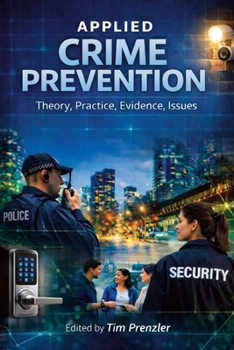
Applied Crime Prevention: Theory, Practice, Evidence, Issues

What actually works in preventing crime?
Crime prevention has become one of the central challenges of modern criminal justice policy. Governments, police agencies, community organisations and security professionals all seek strategies that reduce offending while maintaining fairness, accountability and public trust.
Applied Crime Prevention provides a clear, practical guide to the major approaches used internationally to reduce crime. Drawing on decades of research and real-world case studies, the book shows how prevention strategies can be applied in policing, community safety, corrections and security settings.
The book integrates theory, evidence and practice across a wide range of prevention strategies, including policing, offender rehabilitation, community programs and environmental design. It highlights the importance of systematic planning, evaluation and partnership between stakeholders in achieving sustainable reductions in crime.
Topics covered include best-practice standards for designing and evaluating crime prevention programs; the roles of policing, punishment, deterrence and incapacitation; offender rehabilitation, corrections programs and reintegration strategies; developmental and community-based prevention initiatives; situational crime prevention and opportunity reduction; Crime Prevention Through Environmental Design (CPTED); case studies in reducing property crime, fraud, violence and disorder; and security management and the role of the private security industry.
Concise, accessible and grounded in evidence, the book brings together leading researchers and practitioners to provide a comprehensive overview of contemporary crime prevention strategies.
Ideal for criminology and criminal justice students, police and law enforcement professionals, security and risk management practitioners, community safety and crime prevention agencies, and justice policy and government professionals.
Customer Reviews
ThriftBooks ® and the ThriftBooks ® logo are registered trademarks of Thrift Books Global, LLC
