


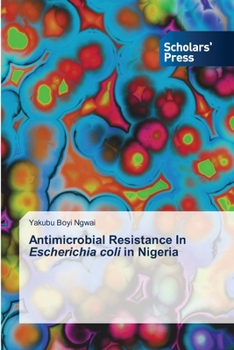
Antimicrobial Resistance In Escherichia coli in Nigeria
No Customer Reviews

Escherichia coli, a Gram-negative, rod shaped, bacteria found in the environment, foods, and in the intestinal tracts of humans and animals in health and disease, is known to cause illnesses in both animals and humans. Treatment of E. coli infections largely employs antimicrobial drugs using beta-lactams, sulfonamides-prymidines, aminoglycosides and fluoroquinolones. Widespread use of these agents has led to the emergence of resistant strains, including multidrug-resistant strains. In Nigeria, antimicrobial resistance (AMR) has been shown in E. coli isolated from humans, animals and environmental sources. The mechanisms of resistance include plasmid-mediated production of enzyme destructases (such as beta-lactamases, aminoglycoside modifying enzymes, and tetracycline destructases), Qnr protection proteins inhibiting quinolones, and activation of efflux pumps; and chromosomal-mediated target alteration due to mutations in genes, such as DNA gyrase (gyrA) and topoisomerase IV (parC) resulting to fluoroquinolones resistance; reduced drug uptake; and active efflux.
Format:Paperback
Language:English
ISBN:6138944895
ISBN13:9786138944898
Release Date:March 2021
Publisher:Scholars' Press
Length:168 Pages
Weight:0.56 lbs.
Dimensions:0.4" x 6.0" x 9.0"
Customer Reviews
0 rating
Copyright © 2026 Thriftbooks.com
Terms of Use | Privacy Policy | Do Not Sell/Share My Personal Information | Cookie Policy | Cookie Preferences | Accessibility Statement
ThriftBooks ® and the ThriftBooks ® logo are registered trademarks of Thrift Books Global, LLC
ThriftBooks ® and the ThriftBooks ® logo are registered trademarks of Thrift Books Global, LLC
