


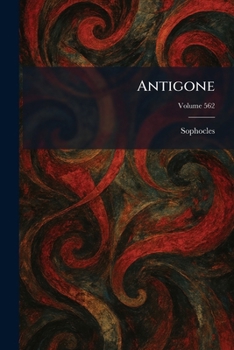



Book Overview
"Antigone" is a cornerstone of ancient Greek literature and one of the most profound tragedies ever written. Composed by the legendary playwright Sophocles, this masterpiece serves as a concluding chapter to the tragic cycle of the House of Oedipus. The play delves into the timeless conflict between personal conscience and the laws of the state, presenting a moral dilemma that continues to resonate with modern audiences.
The narrative follows the resolute Antigone, who defies the edict of King Creon to give her fallen brother a proper burial. Her act of defiance sets the stage for a devastating clash between family loyalty and political authority. Through high-stakes dialogue and rich symbolism, Sophocles explores the concepts of justice, divine law, and the tragic consequences of pride (hubris). This work is not merely a historical artifact but a living interrogation of the human condition and the ethics of power.
Renowned for its structural perfection and emotional depth, "Antigone" remains an essential text for students of drama, philosophy, and classical studies. It offers a haunting look at the inevitable tensions that arise when individual duty meets the unyielding demands of society, cementing its place as an immortal work of Western art.
This work has been selected by scholars as being culturally important, and is part of the knowledge base of civilization as we know it. This work was reproduced from the original artifact, and remains as true to the original work as possible. Therefore, you may see the original copyright references, library stamps (as most of these works have been housed in our most important libraries around the world), and other notations in the work.
This work is in the public domain in the United States of America, and possibly other nations. Within the United States, you may freely copy and distribute this work, as no entity (individual or corporate) has a copyright on the body of the work.
As a reproduction of a historical artifact, this work may contain missing or blurred pages, poor pictures, errant marks, etc. Scholars believe, and we concur, that this work is important enough to be preserved, reproduced, and made generally available to the public. We appreciate your support of the preservation process, and thank you for being an important part of keeping this knowledge alive and relevant.
Customer Reviews
Immortal Play, Perhaps Not Best Translation
Concise, graceful translation
Essential reading for a classical education
Ancient Greek family values
Ἀντιγόνη Mentions in Our Blog
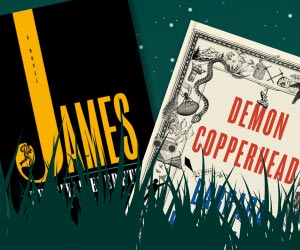
Told from the point of view of the enslaved Jim, Percival Everett's latest novel, James, is a brilliant, action-packed retelling of The Adventures of Huckleberry Finn. If you enjoy stories that reimagine, reframe, or pay homage to classic texts, here are fifteen more titles for you.
ThriftBooks ® and the ThriftBooks ® logo are registered trademarks of Thrift Books Global, LLC
