


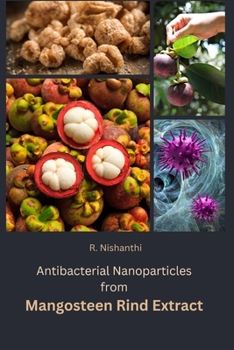
Antibacterial nanoparticles from mangosteen rind extract

Antibacterial resistance is a major concern in healthcare worldwide, leading to an increasing demand for alternative approaches to combat infectious diseases. One potential solution is the use of nanoparticles derived from natural sources. In a recent study conducted by R. Nishanthi, researchers explored the potential of mangosteen rind extract for the synthesis of antibacterial nanoparticles. Mangosteen (Garcinia Mangostana L) is a tropical fruit that is known for its medicinal properties. The rind of the fruit is rich in phytochemicals, which are compounds with potential therapeutic benefits. The researchers extracted phytochemicals from mangosteen rind using a green synthesis approach, which is an eco-friendly and sustainable method of synthesizing nanoparticles. The extract was used as a reducing and capping agent for the synthesis of biogenic silver nanoparticles (AgNPs) and gold nanoparticles (AuNPs). The AgNPs and AuNPs were characterized using various techniques such as UV-visible spectroscopy, transmission electron microscopy, and X-ray diffraction analysis. The results indicated that the nanoparticles were of high quality, with a uniform size distribution and crystalline structure. The AgNPs and AuNPs were further evaluated for their antibacterial activity against human pathogens, including Escherichia coli, Staphylococcus aureus, and Pseudomonas aeruginosa. The nanoparticles exhibited significant antibacterial activity, with a higher zone of inhibition and bactericidal effect compared to streptomycin, a commonly used antibiotic. The researchers also evaluated the minimal inhibitory concentration (MIC) of the nanoparticles, which is the lowest concentration required to inhibit bacterial growth. The MIC values for AgNPs and AuNPs were found to be lower than that of streptomycin, indicating that the nanoparticles are more effective at inhibiting bacterial growth. The nanoparticles derived from mangosteen rind extract also showed potential as drug delivery vehicles for targeted therapy. The researchers suggested that the nanoparticles could be functionalized with streptomycin to improve their antibacterial activity and targeted delivery to infected cells. Overall, the study highlights the potential of mangosteen rind extract for the synthesis of antibacterial nanoparticles using a green and sustainable approach. The nanoparticles showed significant antibacterial activity against human pathogens and could potentially be used as an alternative to antibiotics. The use of natural products for nanoparticle synthesis is an exciting area of research that could lead to the development of new treatments for infectious diseases.
Customer Reviews
ThriftBooks® and the ThriftBooks® logo are registered trademarks of Thrift Books Global, LLC
