


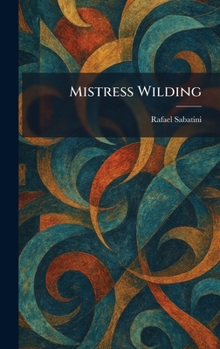
Mistress Wilding


Select Format
Select Condition 
Book Overview
"Mistress Wilding" is a compelling historical adventure and romance set against the volatile backdrop of the Monmouth Rebellion in 1685. The story centers on Anthony Wilding, a man of unwavering honor and resolve, who finds himself entangled in a web of political conspiracy and personal strife during the reign of King James II. When Wilding enters into a marriage with the spirited Ruth Westmacott under duress, he must navigate the complexities of an unwanted union while preparing for the imminent uprising against the crown.
The narrative expertly weaves together the high-stakes tension of a revolution with the intimate developments of a burgeoning romance. As the Duke of Monmouth's forces gather, the characters are forced to choose between loyalty, duty, and their own survival. Written with the characteristic flair for drama and historical detail that defines the work of Rafael Sabatini, "Mistress Wilding" explores themes of integrity, sacrifice, and redemption. This work stands as a quintessential example of the swashbuckling genre, offering a vivid portrayal of 17th-century England and the timeless struggle for justice and affection in an age of uncertainty.
This work has been selected by scholars as being culturally important, and is part of the knowledge base of civilization as we know it. This work was reproduced from the original artifact, and remains as true to the original work as possible. Therefore, you may see the original copyright references, library stamps (as most of these works have been housed in our most important libraries around the world), and other notations in the work.
This work is in the public domain in the United States of America, and possibly other nations. Within the United States, you may freely copy and distribute this work, as no entity (individual or corporate) has a copyright on the body of the work.
As a reproduction of a historical artifact, this work may contain missing or blurred pages, poor pictures, errant marks, etc. Scholars believe, and we concur, that this work is important enough to be preserved, reproduced, and made generally available to the public. We appreciate your support of the preservation process, and thank you for being an important part of keeping this knowledge alive and relevant.
Customer Reviews
Sabatini at his Peak
More historical suspense....
As good as Captain Blood
Not Captain Blood, but still good
ThriftBooks ® and the ThriftBooks ® logo are registered trademarks of Thrift Books Global, LLC
