


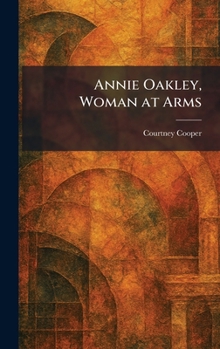
Annie Oakley, Woman at Arms

"Annie Oakley, Woman at Arms" is a compelling biographical account of one of the most iconic figures of the American Frontier. Born Phoebe Ann Mosey, the woman who would become world-famous as Annie Oakley transformed from a humble Ohio trapper into a global sensation and a symbol of female empowerment. This work explores her extraordinary life, focusing on her unparalleled skill as a sharpshooter and her pivotal role in Buffalo Bill Cody's Wild West show.
Courtney Ryley Cooper provides an intimate look at Oakley's career, detailing her rise to fame and her experiences performing before royalty and massive crowds across the globe. The narrative captures her discipline, her legendary accuracy with a rifle, and her enduring legacy as "Little Sure Shot." Beyond the spectacle of the arena, the book delves into her personal character and the determination that allowed her to excel in a male-dominated field.
A classic piece of Americana, "Annie Oakley, Woman at Arms" serves as both a historical record of the entertainment industry during the turn of the century and a tribute to a woman who redefined the possibilities for female athletes and performers. It remains an essential read for those interested in the history of the American West and the lives of its most vibrant legends.
This work has been selected by scholars as being culturally important, and is part of the knowledge base of civilization as we know it. This work was reproduced from the original artifact, and remains as true to the original work as possible. Therefore, you may see the original copyright references, library stamps (as most of these works have been housed in our most important libraries around the world), and other notations in the work.
This work is in the public domain in the United States of America, and possibly other nations. Within the United States, you may freely copy and distribute this work, as no entity (individual or corporate) has a copyright on the body of the work.
As a reproduction of a historical artifact, this work may contain missing or blurred pages, poor pictures, errant marks, etc. Scholars believe, and we concur, that this work is important enough to be preserved, reproduced, and made generally available to the public. We appreciate your support of the preservation process, and thank you for being an important part of keeping this knowledge alive and relevant.
Customer Reviews
ThriftBooks® and the ThriftBooks® logo are registered trademarks of Thrift Books Global, LLC
