


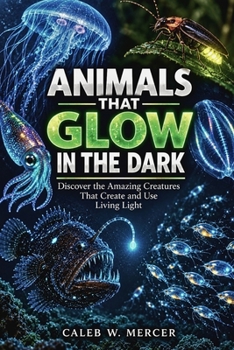
Animals That Glow in the Dark: Discover the Amazing Creatures That Create and Use Living Light

Enter a fascinating world where organisms produce their own illumination for hunting, defense, communication, camouflage, and survival.
From flashing fireflies and glowing ocean drifters to deep-sea fish equipped with biological lanterns, nature has evolved remarkable ways to produce visible illumination. These abilities may appear almost magical, but behind them are extraordinary combinations of chemistry, anatomy, evolution, and ecology.
Animals That Glow in the Dark explores the remarkable organisms that generate or display biological illumination and explains how these abilities function in some of the planet's most unusual environments.
Discover How Biological Illumination WorksLearn how chemical reactions inside organisms can produce visible illumination with very little heat, why different species generate different colors, and how specialized organs, cells, and symbiotic microorganisms can contribute to these remarkable displays.
Inside You'll Discover: How bioluminescence differs from fluorescence and phosphorescenceWhy fireflies flash and how their signaling systems workHow deep-ocean species use illumination to find preyHow counterillumination can help marine organisms avoid detectionWhy some predators use glowing structures as luresHow certain species release luminous material when threatenedWhy blue and blue-green wavelengths are especially common underwaterHow communication signals can help individuals locate potential matesHow microorganisms contribute to illumination in certain marine speciesWhy similar abilities evolved independently in many unrelated groupsHow scientists study biological illumination in difficult environmentsWhat these organisms can teach researchers about chemistry, ecology, and evolutionTravel From Forest Nights to the Deep OceanBiological illumination occurs in remarkably different environments. On land, insects may flash above fields and forests. In the ocean, jelly-like organisms, crustaceans, squid, fish, and microscopic plankton can transform otherwise dark water into brilliant displays.
Understand the Purpose Behind the GlowProducing illumination takes energy, so these abilities usually provide an important advantage. Depending on the species, illumination may attract prey, confuse predators, conceal a silhouette, warn attackers, coordinate behavior, or help individuals communicate.
Separate Bioluminescence From Other Glowing EffectsNot every glowing organism generates illumination in the same way. Bioluminescent organisms produce illumination through chemical reactions, while fluorescent organisms absorb particular wavelengths and re-emit them differently. Understanding these distinctions reveals just how varied nature's visual systems can be.
Perfect for wildlife enthusiasts, students, ocean lovers, nature readers, and anyone fascinated by unusual biology, this book offers an accessible journey into one of nature's most spectacular biological phenomena.
Related Subjects
NatureCustomer Reviews
ThriftBooks ® and the ThriftBooks ® logo are registered trademarks of Thrift Books Global, LLC
