


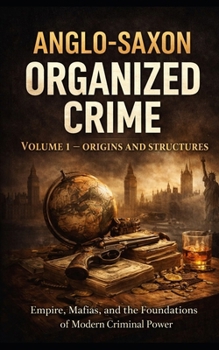
Anglo-Saxon Organized Crime

Organized crime is often portrayed as a marginal phenomenon-confined to the underworld, operating in opposition to institutions and outside the normal functioning of society. This reassuring narrative obscures a more complex historical reality. Certain forms of organized crime did not develop against the system, but within the economic, imperial, and institutional transformations that shaped the modern Anglo-Saxon world.
This first volume offers a historical analysis of the origins of organized crime, tracing its emergence from 19th-century British urban gangs to the rationalized criminal organizations of Prohibition-era America. Through detailed case studies, named figures, and concrete social settings, the book examines how urbanization, imperial expansion, colonial governance, and industrialization created environments in which structured criminal networks could take root and endure.
From the streets of Birmingham and Manchester to the docks of London, from colonial Ireland to penal Australia, and finally to the American cities transformed by Prohibition, this work explores the gray zones where legality and illegality intersect. It highlights recurring structural patterns: territorial control, informal hierarchies, strategic use of violence, economic rationalization, and ambivalent relationships with authority.
Grounded in historical archives and major academic works, this book is neither a legal accusation nor a sensationalist expos . It is an essay in social and historical analysis, focused on understanding how organized crime emerged as a durable social structure rather than a series of isolated acts.
Anglo-Saxon Organized Crime - Volume 1 lays the foundations for a broader series examining organized crime as a historical product of modernity. By returning to its origins, it provides essential analytical tools for understanding the forms these structures would later take in the contemporary world.
Customer Reviews
ThriftBooks ® and the ThriftBooks ® logo are registered trademarks of Thrift Books Global, LLC
