


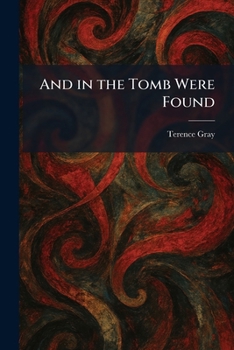
And in the Tomb Were Found

"And in the Tomb Were Found" is a compelling collection of dramatic reconstructions and plays centered on the life, culture, and mysteries of Ancient Egypt. Written by Terence Gray, a notable figure in early 20th-century theatre and Egyptology, this work breathes life into the archaeological discoveries of its era through the medium of the stage. The book presents a series of vignettes and longer plays that transport the reader to the courts of the Pharaohs, offering an imaginative yet historically informed exploration of figures such as Khufu, Amenemhet I, and Akhenaten.
Through vivid dialogue and atmospheric settings, Gray explores themes of power, spirituality, and the inevitable passage of time. The narratives are deeply informed by the author's knowledge of Egyptian history, providing a unique bridge between scholarly research and creative storytelling. These dramas serve not only as entertainment but as an evocative resurrection of a vanished civilization, reflecting the intense global fascination with Egyptology following the discovery of Tutankhamun's tomb. This work remains a significant example of historical drama, capturing the majesty and complexity of the Nile's ancient rulers with literary flair and historical reverence.
This work has been selected by scholars as being culturally important, and is part of the knowledge base of civilization as we know it. This work was reproduced from the original artifact, and remains as true to the original work as possible. Therefore, you may see the original copyright references, library stamps (as most of these works have been housed in our most important libraries around the world), and other notations in the work.
This work is in the public domain in the United States of America, and possibly other nations. Within the United States, you may freely copy and distribute this work, as no entity (individual or corporate) has a copyright on the body of the work.
As a reproduction of a historical artifact, this work may contain missing or blurred pages, poor pictures, errant marks, etc. Scholars believe, and we concur, that this work is important enough to be preserved, reproduced, and made generally available to the public. We appreciate your support of the preservation process, and thank you for being an important part of keeping this knowledge alive and relevant.
Customer Reviews
ThriftBooks ® and the ThriftBooks ® logo are registered trademarks of Thrift Books Global, LLC
