


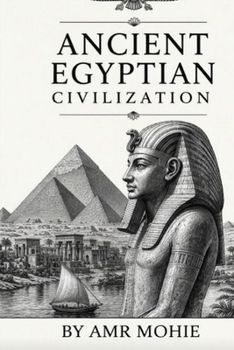
ANCIENT EGYPTIAN CIVILIZATION: find the most civilization ever the edge have (history of egypt)
No Customer Reviews

INTRODUCTION
For thousands of years,
monumental structures have stood
across the land of Egypt.
Pyramids rise above the desert.
Massive temples stretch
their columns toward the sky.
And enormous obelisks,
carved from stone,
once seemed to challenge
the heavens themselves.
These buildings were not
simply massive architectural
achievements.
Behind every stone
there was measurement
and planning.
Behind every project
there were workers
and skilled craftsmen.
There were also quarries
located far from
the construction sites.
The stones had to be
extracted from the ground.
Then they had to be
transported from one place
to another.
After that, they had to be
lifted and placed
in their exact positions.
All of this happened
in a time when people
did not have modern machines.
They had no steel cranes.
They had no engines
or trucks.
Yet the ancient Egyptians
were able to construct
enormous structures.
This knowledge developed
over many centuries.
The great pyramids
did not appear at the beginning
of Egyptian history.
They were preceded
by long periods of
experimentation and development.
Early funerary architecture
was much simpler.
Then mastabas appeared.
After that, stone architecture
developed rapidly.
During the reign of King Djoser,
the Step Pyramid appeared
at Saqqara.
This was an important turning
point in Egyptian construction.
Later came further
experiments during
the Fourth Dynasty.
Over time, Egyptian builders
reached the construction
of the great pyramids.
Among the most famous
is the Pyramid of Khufu
at Giza.
There, one of the greatest
engineering projects
of the ancient world
was created.
But understanding
a pyramid does not begin
at its summit.
It begins with the ground.
It begins with the choice
of the location.
Then comes an understanding
of the geological conditions.
After that comes
the determination
of directions.
Then comes measurement.
Then the extraction
of stone.
Then its transportation
to the construction site.
Finally, the stones must be
lifted and placed
in their positions.
For this reason,
the study of the pyramids
requires more than one field.
We need archaeology.
We need engineering.
We need geology.
We need astronomy.
We also need to understand
administration and organization
in ancient Egypt.
A massive project
cannot depend on physical strength
alone.
It requires an entire system.
And this system is one
of the most important aspects
of Egyptian architecture.
For thousands of years,
monumental structures have stood
across the land of Egypt.
Pyramids rise above the desert.
Massive temples stretch
their columns toward the sky.
And enormous obelisks,
carved from stone,
once seemed to challenge
the heavens themselves.
These buildings were not
simply massive architectural
achievements.
Behind every stone
there was measurement
and planning.
Behind every project
there were workers
and skilled craftsmen.
There were also quarries
located far from
the construction sites.
The stones had to be
extracted from the ground.
Then they had to be
transported from one place
to another.
After that, they had to be
lifted and placed
in their exact positions.
All of this happened
in a time when people
did not have modern machines.
They had no steel cranes.
They had no engines
or trucks.
Yet the ancient Egyptians
were able to construct
enormous structures.
This knowledge developed
over many centuries.
The great pyramids
did not appear at the beginning
of Egyptian history.
They were preceded
by long periods of
experimentation and development.
Early funerary architecture
was much simpler.
Then mastabas appeared.
After that, stone architecture
developed rapidly.
During the reign of King Djoser,
the Step Pyramid appeared
at Saqqara.
This was an important turning
point in Egyptian construction.
Later came further
experiments during
the Fourth Dynasty.
Over time, Egyptian builders
reached the construction
of the great pyramids.
Among the most famous
is the Pyramid of Khufu
at Giza.
There, one of the greatest
engineering projects
of the ancient world
was created.
But understanding
a pyramid does not begin
at its summit.
It begins with the ground.
It begins with the choice
of the location.
Then comes an understanding
of the geological conditions.
After that comes
the determination
of directions.
Then comes measurement.
Then the extraction
of stone.
Then its transportation
to the construction site.
Finally, the stones must be
lifted and placed
in their positions.
For this reason,
the study of the pyramids
requires more than one field.
We need archaeology.
We need engineering.
We need geology.
We need astronomy.
We also need to understand
administration and organization
in ancient Egypt.
A massive project
cannot depend on physical strength
alone.
It requires an entire system.
And this system is one
of the most important aspects
of Egyptian architecture.
Format:Paperback
Language:English
ISBN:B0HG4Z2GJ8
ISBN13:9798191485614
Release Date:August 2026
Publisher:Independently published
Length:494 Pages
Weight:1.31 lbs.
Dimensions:9.0" x 1.2" x 6.0"
Related Subjects
HistoryCustomer Reviews
0 rating
Copyright © 2026 Thriftbooks.com
Terms of Use | Privacy Policy | Do Not Sell/Share My Personal Information | Cookie Notice | Cookie Preferences | Accessibility Statement
ThriftBooks ® and the ThriftBooks ® logo are registered trademarks of Thrift Books Global, LLC
ThriftBooks ® and the ThriftBooks ® logo are registered trademarks of Thrift Books Global, LLC
