


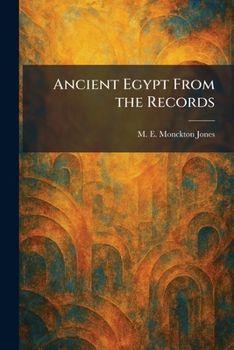
Ancient Egypt From the Records

"Ancient Egypt From the Records" is a comprehensive historical account that examines the rise and development of one of the world's most enduring civilizations. Utilizing primary source material and archaeological evidence, M. E. Monckton Jones offers a narrative that stays close to the actual documents left behind by the ancient Egyptians themselves.
The work provides a detailed look at the progression of Egyptian history, from the early periods of unification through the complexities of the various dynasties. By focusing on the records-including inscriptions, royal decrees, and religious texts-the author brings to life the administrative structures, religious practices, and social hierarchies that defined life along the Nile. This approach allows readers to experience the history of Egypt through the voices of its rulers and people, offering a direct connection to the past.
Ideal for students of archaeology and history enthusiasts alike, "Ancient Egypt From the Records" remains a valuable resource for understanding the foundations of Egyptology and the methods used to reconstruct ancient narratives. It serves as an essential guide to the legacy of the Pharaohs and the monumental culture they created for the ages.
This work has been selected by scholars as being culturally important, and is part of the knowledge base of civilization as we know it. This work was reproduced from the original artifact, and remains as true to the original work as possible. Therefore, you may see the original copyright references, library stamps (as most of these works have been housed in our most important libraries around the world), and other notations in the work.
This work is in the public domain in the United States of America, and possibly other nations. Within the United States, you may freely copy and distribute this work, as no entity (individual or corporate) has a copyright on the body of the work.
As a reproduction of a historical artifact, this work may contain missing or blurred pages, poor pictures, errant marks, etc. Scholars believe, and we concur, that this work is important enough to be preserved, reproduced, and made generally available to the public. We appreciate your support of the preservation process, and thank you for being an important part of keeping this knowledge alive and relevant.
Customer Reviews
ThriftBooks ® and the ThriftBooks ® logo are registered trademarks of Thrift Books Global, LLC
