
Skip to content
Scan a barcode
Scan
Paperback Anarchy and the Environment: The International Relations of Common Pool Resources Book

ISBN: 0791441849

ISBN13: 9780791441848

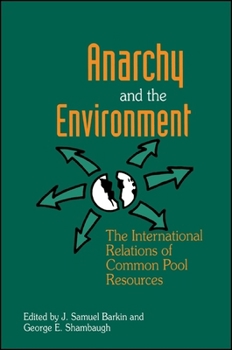
Anarchy and the Environment: The International Relations of Common Pool Resources

Select Format

Select Condition ThriftBooks Help Icon

Recommended

Format: Paperback

Condition: Very Good

$8.19
Save $26.76!
List Price $34.95
Almost Gone, Only 1 Left!

Book Overview

Argues that the logic of common pool resources is the most appropriate and productive way to understand international environmental conflict, and offers important practical insights into environmental negotiations and bargaining.

Anarchy and the Environment examines how the recognition of environmental limits, combined with the ability of states to degrade common environmental resources, affects the strategies and bargaining power of particular groups involved in international environmental negotiations. The contributors examine a wide range of environmental issues, including fisheries management, ozone depletion, acid rain, and water consumption rights, offering important practical insights into environmental negotiations and bargaining. Anarchy and the Environment also offers an important theoretical contribution by challenging the conventional explanations of bargaining dynamics and the resolution of collective action problems in international environmental politics.

This book analyzes these problems and uses them as means to evaluate and expand upon common hypotheses regarding the shadow effect of the future on current behavior, the role of free riders in management regimes, and the role of market power in solving collective action and enforcement problems in international environmental management.

Contributors include J. Samuel Barkin, Barbara Connolly, Elizabeth R. DeSombre, David Leonard Downie, Christopher C. Joyner, Richard A. Matthew, Ronald Mitchell, and George E. Stambaugh VI.

Customer Reviews

2 ratings

Useful book on international environmental problems

This edited book examines how countries manage "common pool resources" (CPRs) at the international level. Many environmental problems involve CPRs, which are accessible to many people ("nonexcludable") but can be used up by whomever gets them first ("rival in consumption"). Fisheries on the high seas, for example, are a classic CPR - - - no one owns the fish, but fish that one boat catches are not available to others. CPRs pose a problem because, unlike private goods (a catfish pond, say), no one has an incentive to take care of the resource by themselves. The authors argue that international CPRs pose a more difficult problem than CPRs in a single country, such as a rainforest. I wasn't convinced by those claims. But the core of the book tests a series of hypotheses about the conditions under which international CPRs can be managed more or less effectively. The hypotheses seem pretty reasonable, and well supported - - they should be, as the authors clearly developed the hypotheses inductively from the cases, though the introduction to the book tries to put a deductive gloss on the project. Unlike most edited volumes, the contributors followed their instructions, and this book is much more unified than almost any edited book I've read. My only main objection is that most of the hypotheses seemed pretty obvious. In addition, the authors and editors didn't think too hard about research design and case selection - - it's clear that each contributor wrote on a favorite topic, though again (and to their credit) they all took the analytical framework pretty seriously. It's an academic book but would be useful for undergraduates and graduate students in environmental politics, political science, and public policy.

Insightful!

This is a truly fascinating book. It is a must read for any one interested in the environment, international affairs, bargaining or negotiation strategies. Its presents a clear and useful framework for understanding environmental issues and the bargaining strategies states use when negotiating international environmental agreements. Environmentalists, political scientists, and business people alike should read it. They will enjoy themselves and learn something in the process!
Copyright © 2026 Thriftbooks.com Terms of Use | Privacy Policy | Do Not Sell/Share My Personal Information | Cookie Policy | Cookie Preferences | Accessibility Statement
ThriftBooks® and the ThriftBooks® logo are registered trademarks of Thrift Books Global, LLC

GoDaddy Verified and Secured