
Skip to content
Scan a barcode
Scan
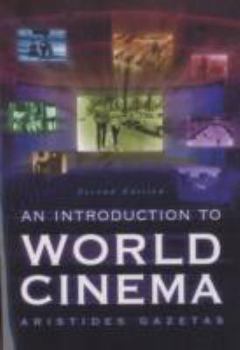
Paperback An Introduction to World Cinema, 2d ed. Book

ISBN: 0786439076

ISBN13: 9780786439072

An Introduction to World Cinema, 2d ed.

Select Format

Select Condition ThriftBooks Help Icon

Recommended

Format: Paperback

Condition: Good

$9.69
Save $30.26!
List Price $39.95
Almost Gone, Only 1 Left!
Save to List

Book Overview

Motion pictures are more than just entertainment. In film studies courses in colleges and universities worldwide, students and professors explore the social, political, technological and historical implications of cinema.

This textbook provides two things: the history of film as an art form and an analysis of its impact on society and politics. Chapters are arranged chronologically, covering the major developments in film, like the advent of talkies or the French New Wave. Each era is examined in the context of several exemplary films commonly viewed in film studies courses. Thus students can watch Birth of a Nation and Intolerance while studying the innovations made by D.W. Griffith from 1910 to 1919. The scope is global, embracing the cinematic traditions of Asia, Latin America and Africa, as well as the ever important American and European output. Thoughtful articles from film scholars are included. The flexible structure of the text allows a variety of options for classroom use or personal study.

Instructors considering this book for use in a course may request an examination copy here.

Customer Reviews

2 ratings

Film as life form

Aristides Gazetas has managed to cram an insightful and relatively comprehensive history and analysis of world cinema between the covers of a single volume--no small feat. There are lacunae. The films surveyed tend to be European and American (inclusive of both the north and the south), and Asian and Indian cinema are short-changed. But such gaps are perhaps inevitable in a book that seeks to cover a great deal of ground. What Gazetas does, he does well. He begins with a survey of silent films, with an especially good chapter on D.W. Griffith, and moves on to consider movements such as French avant-garde cinema, the Hollywood phenomenon in all its stages, Italian neorealism, symbolist traditions (particularly Bergman and Bunuel), French New Wave, and postwar German and Italian cinema. He has a rather sketchy chapter on post-colonial narratives, and for this second edition he's added a couple of chapters: one on terrorism and cinema (which is in large part a recycling of the first edition's discussion of von Trotta's "Marianne and Juliane") and one on recent Canadian films. Throughout, Gazetas stresses that cinema is what the philosopher Wittgenstein would've called a "life form": a living phenomenon which arises from a particular historical and cultural context and which in turn influences the context that births it.* In a significant way, says Gazetas, contemporary life has been "cinematized." Cinematic images, metaphors, and frameworks have become a part of daily life and serve in part as filters through which we read and construct reality. So reflecting on world cinema isn't only an aesthetic or sociological enterprise. It's also a postmodern metaphysical one. Gazetas' book is a good place to begin for any serious student of film. It's well-written, cogently organized, loaded with stills, and features six intriguing guest essays (all of the are good; but for my money, the most intriguing is Andre Bazin's "The Evolution of the Language of Cinema"). When you read the book, be sure to have a pencil and paper handy to jot down the titles of all the films Gazetas' text will make you want to watch. _________ * Gazetas doesn't actually refer to Wittgenstein, but it seems to me that his understanding of cinema is compatible with the notion of "life form."

Few mass mediums have as wide spread and enduringly influential cultural impact as the movies.

Few mass mediums have as wide spread and enduringly influential cultural impact as the movies. Written by playwright, director, and teacher of 30 years' experience Aristides Gazetas, An Introduction to World Cinema is now in an updated second edition. A scholarly, college-level textbook concerning the global history of film as an art form, as well as an analysis of its effect on society and politics, An Introduction to World Cinema chronologically covers major developments in film worldwide from its early beginnings to the modern day. A handful of black-and-white photographs and an index round out this excellent general primer. "During the postwar years, Kurosawa saw the national recovery of Japan as a moment in history when his own cinematic voice could respond to the new political and social climate. He attempted a didactic cinema that would express his own thematic concerns about human moral responsibility to others and the emotional desire for power. Kurosawa's heroes combat the ethical and psychological dilemmas that influence their beliefs and actions."
Copyright © 2026 Thriftbooks.com Terms of Use | Privacy Policy | Do Not Sell/Share My Personal Information | Cookie Policy | Cookie Preferences | Accessibility Statement
ThriftBooks ® and the ThriftBooks ® logo are registered trademarks of Thrift Books Global, LLC

GoDaddy Verified and Secured