


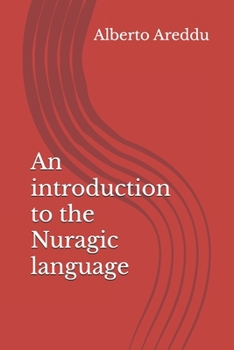
An introduction to the Nuragic language
No Customer Reviews

Many hypotheses have been proposed-often presenting contrasting scenarios-regarding the origins of the Nuragic language, which has survived to the present day in a few lexical items and numerous toponyms. By retracing these different scenarios and highlighting the objective limitations of various reconstructions, the Author revisits-also on the basis of new glottological evidence-the idea of a privileged relationship between Paleo-Sardinian (an Indo-European language) and the Balkan and Aegean worlds, predating the full emergence of Hellas.
Format:Paperback
Language:English
ISBN:B0FVDK4YJF
ISBN13:9798268805642
Release Date:October 2025
Publisher:Independently Published
Length:112 Pages
Weight:0.35 lbs.
Dimensions:0.3" x 6.0" x 9.0"
Customer Reviews
0 rating
Copyright © 2026 Thriftbooks.com Terms of Use
| Privacy Policy | Do Not
Sell/Share My Personal Information | Cookie Policy | Cookie Preferences | Accessibility Statement
ThriftBooks® and the ThriftBooks® logo are registered trademarks of Thrift Books Global, LLC
ThriftBooks® and the ThriftBooks® logo are registered trademarks of Thrift Books Global, LLC
