


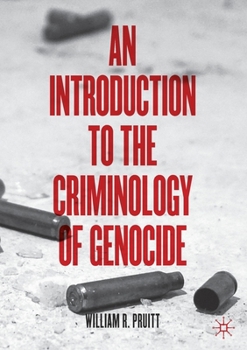
An Introduction to the Criminology of Genocide
No Customer Reviews

1. Chapter 1 What is genocide? 1.1 Pre-Genocide 1.2 Genocide according to Lemkin 1.3 Genocide according to the United Nations 1.4 Other definitions of genocide 1.5 Genocide as a crime
2. Chapter 2 How can we understand genocide? 2.1 Law 2.2 Psychology 2.3 Political Science 2.4 Sociology 2.5 Criminology
3. Chapter 3 Why does genocide occur? 3.1 Agency-oriented Theories 3.2 Structural Theories 3.3 Victim-group Construction Theories 3.4 Biological Theories 3.5 Criminological Theories
4. Chapter 4 Who commits genocide? 4.1 State Crime 4.2 Organizational Crime 4.3 The State as an Organization 4.4 Collective Violence 4.5 Individual Genocidaires 4.6 The Browning-Goldhagen Debate 4.7 Organizational Genocidaires
5. Chapter 5 When and where does genocide occur? 5.1 Genocide prior to 1948 5.1.1 Herero Genocide 5.1.2 Armenian Genocide 5.2 Genocide after 1948 5.2.1 Bangladesh Genocide 5.2.2 East Timor Genocide 5.2.3 Kurdish Genocide 5.2.4 Rwandan Genocide 5.2.5 Bosnian Genocide 5.2.6 Darfur Genocide 5.2.7 Rohingya Genocide
6. Chapter 6 How do we respond to genocide?6.1 United Nations Convention on the Prevention and Punishment of the Crime of Genocide 6.2 The Responsibility to Protect 6.3 International Criminal Tribunals 6.4 The International Criminal Court 6.5 National Courts 6.6 Gacaca Courts 6.7 What Can You Do
7. Chapter 7 What happens when genocide is denied? 7.1 Holocaust Awareness 7.2 Denying History 7.3 Genocide Denial Legislation 7.3.1 Denying 7.3.2 Public v. Private Denial 7.3.3 Good Uses of Denial Laws(?) 7.3.4 Bad Uses of Denial Laws(?) 7.4 Denial Legislation Goals
2. Chapter 2 How can we understand genocide? 2.1 Law 2.2 Psychology 2.3 Political Science 2.4 Sociology 2.5 Criminology
3. Chapter 3 Why does genocide occur? 3.1 Agency-oriented Theories 3.2 Structural Theories 3.3 Victim-group Construction Theories 3.4 Biological Theories 3.5 Criminological Theories
4. Chapter 4 Who commits genocide? 4.1 State Crime 4.2 Organizational Crime 4.3 The State as an Organization 4.4 Collective Violence 4.5 Individual Genocidaires 4.6 The Browning-Goldhagen Debate 4.7 Organizational Genocidaires
5. Chapter 5 When and where does genocide occur? 5.1 Genocide prior to 1948 5.1.1 Herero Genocide 5.1.2 Armenian Genocide 5.2 Genocide after 1948 5.2.1 Bangladesh Genocide 5.2.2 East Timor Genocide 5.2.3 Kurdish Genocide 5.2.4 Rwandan Genocide 5.2.5 Bosnian Genocide 5.2.6 Darfur Genocide 5.2.7 Rohingya Genocide
6. Chapter 6 How do we respond to genocide?6.1 United Nations Convention on the Prevention and Punishment of the Crime of Genocide 6.2 The Responsibility to Protect 6.3 International Criminal Tribunals 6.4 The International Criminal Court 6.5 National Courts 6.6 Gacaca Courts 6.7 What Can You Do
7. Chapter 7 What happens when genocide is denied? 7.1 Holocaust Awareness 7.2 Denying History 7.3 Genocide Denial Legislation 7.3.1 Denying 7.3.2 Public v. Private Denial 7.3.3 Good Uses of Denial Laws(?) 7.3.4 Bad Uses of Denial Laws(?) 7.4 Denial Legislation Goals
Format:Paperback
Language:English
ISBN:3030652106
ISBN13:9783030652104
Release Date:January 2021
Publisher:Palgrave MacMillan
Length:187 Pages
Weight:0.60 lbs.
Dimensions:0.5" x 5.8" x 8.3"
Customer Reviews
0 rating
Copyright © 2026 Thriftbooks.com Terms of Use
| Privacy Policy | Do Not
Sell/Share My Personal Information | Cookie Policy | Cookie Preferences | Accessibility Statement
ThriftBooks® and the ThriftBooks® logo are registered trademarks of Thrift Books Global, LLC
ThriftBooks® and the ThriftBooks® logo are registered trademarks of Thrift Books Global, LLC
