


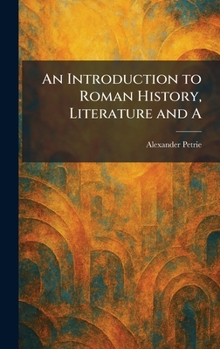
An Introduction to Roman History, Literature and A

"An Introduction to Roman History, Literature and Antiquities" serves as a foundational guide for students and scholars seeking a comprehensive overview of the Roman world. Alexander Petrie's work systematically explores the three pillars of Roman civilization: its political history, its enduring literary contributions, and the social antiquities that shaped daily life.
The historical section traces Rome's trajectory from its legendary beginnings through the rise of the Republic and the eventual zenith of the Empire. In the realm of literature, the book highlights the major authors and movements that have influenced Western thought for centuries, providing critical context for the masterworks of the Latin canon. Furthermore, the exploration of antiquities offers valuable insights into Roman law, religious practices, military organization, and private life, presenting a holistic view of a civilization that laid the groundwork for modern society.
By integrating these diverse facets of the Roman experience, Petrie provides a narrative that is both educational and engaging. This work remains an essential resource for anyone interested in the Classical world, providing the necessary context to appreciate the legacy of Rome in its entirety.
This work has been selected by scholars as being culturally important, and is part of the knowledge base of civilization as we know it. This work was reproduced from the original artifact, and remains as true to the original work as possible. Therefore, you may see the original copyright references, library stamps (as most of these works have been housed in our most important libraries around the world), and other notations in the work.
This work is in the public domain in the United States of America, and possibly other nations. Within the United States, you may freely copy and distribute this work, as no entity (individual or corporate) has a copyright on the body of the work.
As a reproduction of a historical artifact, this work may contain missing or blurred pages, poor pictures, errant marks, etc. Scholars believe, and we concur, that this work is important enough to be preserved, reproduced, and made generally available to the public. We appreciate your support of the preservation process, and thank you for being an important part of keeping this knowledge alive and relevant.
Customer Reviews
ThriftBooks ® and the ThriftBooks ® logo are registered trademarks of Thrift Books Global, LLC
