


All Formats & Editions

Essay on Man: Moral Essays and Satires

An Essay on Man: Moral Essays and Satires
Alexander Pope (1688-1744) was an English poet best known for his satirical verse and use of the heroic couplet. Some of Pope's most popular works include his essay on criticism as well as the poems The Rape of the Lock and The Dunciad.
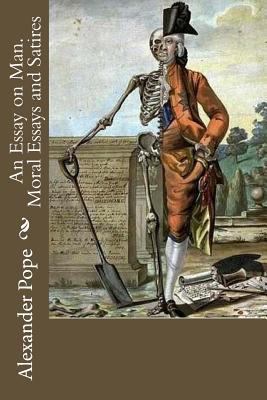
An Essay on Man. Moral Essays and Satires
An Essay on Man is a poem published by Alexander Pope in 1734. It is a rationalistic effort to use philosophy in order to "vindicate the ways of God to man" (l.16), a variation of John Milton's claim in the opening lines of Paradise Lost, that he will "justify the ways of God...
An Essay on Man; Moral Essays and Satires
Alexander Pope published a poem titled "An Essay on Man: Moral Essays and Satires" between 1733 and 1734. The opening line, "Awake, St. John," refers to Henry St. John, 1st Viscount Bolingbroke, which is pronounced, "Bull-en-brook." In the opening lines of Paradise Lost, John...
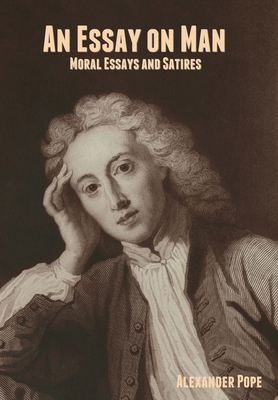
An Essay on Man; Moral Essays and Satires
An Essay on Man is a poem published by Alexander Pope in 1733-1734. It was dedicated to Henry St John, 1st Viscount Bolingbroke, (pronounced 'Bull-en-brook') hence the opening line: "Awake, St John...". It is an effort to rationalize or rather "vindicate the ways of God to...

An Essay on Man; Moral Essays and Satires
An Essay on Man is a poem published by Alexander Pope in 1733-1734. It was dedicated to Henry St John, 1st Viscount Bolingbroke, (pronounced 'Bull-en-brook') hence the opening line: "Awake, St John...". It is an effort to rationalize or rather "vindicate the ways of God to...
An Essay on Man; Moral Essays and Satires
Alexander Pope published a poem titled "An Essay on Man: Moral Essays and Satires" between 1733 and 1734. The opening line, "Awake, St. John," refers to Henry St. John, 1st Viscount Bolingbroke, which is pronounced, "Bull-en-brook." In the opening lines of Paradise Lost, John...

An Essay on Man.: Moral Essays and Satires

Essay on Man Moral Essays and Satires

An Essay on Man: Moral Essays and Satires
An Essay on Man: Moral Essays and Satires by Alexander Pope. An Essay on Man is a poem published by Alexander Pope in 1733-1734. It is an effort to rationalize or rather "vindicate the ways of God to man", a variation of John Milton's claim in the opening lines of Paradise Lost,...
An Essay on man; Moral Essays and Satires
This work has been selected by scholars as being culturally important, and is part of the knowledge base of civilization as we know it. This work is in the "public domain in the United States of America, and possibly other nations. Within the United States, you may freely...
An Essay on man; Moral Essays and Satires

An Essay on Man: Moral Essays and Satires
An Essay on Man: Moral Essays and Satires by Alexander Pope, 1891. An Essay on Man is a poem published by Alexander Pope in 1733-1734. It is an effort to rationalize or rather "vindicate the ways of God to man", a variation of John Milton's claim in the opening lines of Paradise...
An Essay On Man; Moral Essays And Satires
A brisk, humane beacon through the fog of modern ambiguity. An Essay On Man; Moral Essays And Satires gathers a spellbinding conversation across reason and passion, a verse-driven inquiry into human nature and the limits of knowledge. This carefully retooled edition presents...

An Essay on Man: Moral Essays and Satires
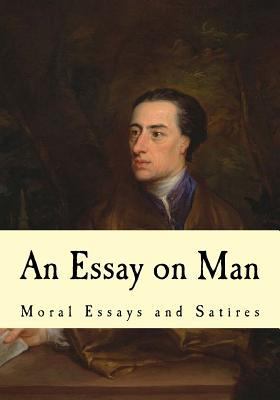
An Essay on Man: Moral Essays and Satires
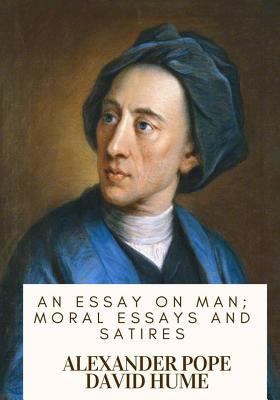
An Essay on Man; Moral Essays and Satires
This volume contains a rich selection of Pope's work, including such well-known poems as the title selection-a philosophical meditation on the nature of the universe and man's place in it-and "The Rape of the Lock," a mock-epic of rare charm and skill. Also included are "Ode...

An Essay on Man; Moral Essays and Satires

An Essay on Man; Moral Essays and Satires
Pope's life as a writer falls into three periods, answering fairly enough to the three reigns in which he worked. Under Queen Anne he was an original poet, but made little money by his verses; under George I. he was chiefly a translator, and made much money by satisfying the...
An Essay on Man; Moral Essays and Satires

An Essay On Man; Moral Essays And Satires
An Essay on Man: Moral essays and satires
Pope's life as a writer falls into three periods, answering fairly enoughto the three reigns in which he worked. Under Queen Anne he was anoriginal poet, but made little money by his verses; under George I. hewas chiefly a translator, and made much money by satisfying the French-classical...
An Essay on Man. Moral Essays and Satires.
An Essay on Man is a poem published by Alexander Pope in 1733-1734. It is an effort to rationalize or rather "vindicate the ways of God to man" (l.16), a variation of John Milton's claim in the opening lines of Paradise Lost, that he will "justify the ways of God to men" (1.26)...
Essay on Man Moral Essays and Satires
CLASSIC BOOKS ON PHILOSOPHY - An Essay on Man, Moral Essays and Satires - NEW EDITION, By Alexander Pope. An Essay on Man is a poem published by Alexander Pope in 1734. It is a rationalistic effort to use philosophy in order to "vindicate the ways of God to man" (l.16), a variation...

An Essay on Man:: Moral Essays and Satires
ThriftBooks ® and the ThriftBooks ® logo are registered trademarks of Thrift Books Global, LLC
