


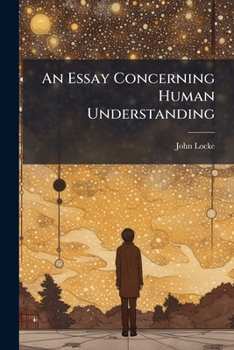
An Essay Concerning Human Understanding: Of Human Understanding. A Defence Of Mr. Locke's Opinion Concerning Personal Identity. Of The Conduct Of The

Select Format
Select Condition 
Book Overview
"An Essay Concerning Human Understanding" by John Locke is a seminal work in the history of philosophy. This edition encompasses not only Locke's groundbreaking exploration of the nature of human knowledge and its limits but also includes supplementary texts that further illuminate his philosophical positions.
Included are "A Defence Of Mr. Locke's Opinion Concerning Personal Identity," which addresses critical interpretations of his views on selfhood and consciousness; "Of The Conduct Of The Understanding," offering practical advice on cultivating intellectual habits and avoiding common errors in reasoning; "Some Thoughts Concerning Reading And Study For A Gentleman," providing insights into the educational ideals of the period; and "Elements Of Natural Philosophy," showcasing Locke's engagement with the scientific thought of his time. Together, these texts provide a comprehensive view of Locke's contributions to epistemology, metaphysics, and the philosophy of education, making this volume an invaluable resource for students and scholars alike.
This work has been selected by scholars as being culturally important, and is part of the knowledge base of civilization as we know it. This work was reproduced from the original artifact, and remains as true to the original work as possible. Therefore, you will see the original copyright references, library stamps (as most of these works have been housed in our most important libraries around the world), and other notations in the work.
This work is in the public domain in the United States of America, and possibly other nations. Within the United States, you may freely copy and distribute this work, as no entity (individual or corporate) has a copyright on the body of the work.
As a reproduction of a historical artifact, this work may contain missing or blurred pages, poor pictures, errant marks, etc. Scholars believe, and we concur, that this work is important enough to be preserved, reproduced, and made generally available to the public. We appreciate your support of the preservation process, and thank you for being an important part of keeping this knowledge alive and relevant.
Customer Reviews
ThriftBooks® and the ThriftBooks® logo are registered trademarks of Thrift Books Global, LLC
