


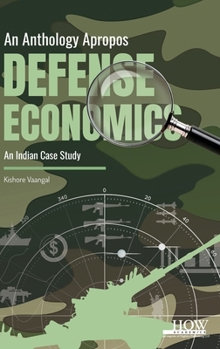
An Anthology Apropos Defense Economics

The book, in effect, provides perceptive insights apropos seminal ideations in the realms of Defense Economics and, in the author's considered opinion, the time has come to showcase these ideations, simply because of the contumacy, calumny, unrest, vileness, and venality that pervades the geo-economic and geopolitical landscape of the world today. The book proffers a 360-degree perspective of the realms of Defense Economics, in the Indian context, and while doing so, it offers a breathtaking view of the interrelatedness of the domain of Defense Economics with other facets of economics like that of Welfarism, Monetary Economics, Institutional Economics, Macroeconomics, International Economics, and Human Capital theory. Albeit set in the genre of the Indian scheme of things, the insightful observations would serve as a ready reckoner to policymakers, politicians, economists, and jurists around the world. The penchant for eventuating on wars has become a stark raving reality, given the lucidly observable vileness of the United Nations Security Council and its partisan ways, and as a natural corollary, nations have, across geographies, gone on to uphold the adage that a "Good Defense is the Best Offense." The Republic of India is no exception, given that it has a few scalawag states as neighbors, and despite India's avowed stance apropos upholding non-violent ways, the curious gallimaufry of neighboring states has compelled India to go in for a defense program to meet her security and safeguarding requirements. The bottom line is that defense spending is here to stay, and as such, it has to be recognized that the realm of Defense Economics is a mainstay domain that needs to be paid seminal heed to as, over the next decade or so, the world will be characterized by wars, and every nation would have to come to terms with the same.
Customer Reviews
ThriftBooks ® and the ThriftBooks ® logo are registered trademarks of Thrift Books Global, LLC
