


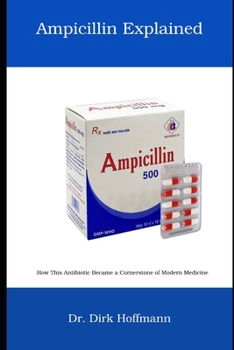
Ampicillin Explained

In the face of evolving resistance and a crowded antibiotic landscape, ampicillin remains a reliable agent with enduring clinical relevance. But what gives this decades-old antibiotic its staying power? How do we use it optimally in today's healthcare setting?
In Ampicillin Explained, infectious disease expert Dr. Dirk Hoffmann provides a clear, evidence-informed, and accessible reference that demystifies the use of this essential beta-lactam. From its origins in the 1960s to its role in treating neonatal sepsis, Listeria meningitis, and Enterococcal infections, this book is both a tribute to and a toolkit for ampicillin's rational use in the modern era.
Inside this Guide:
✅ A concise historical evolution of ampicillin's development
✅ Mechanism of action, pharmacodynamics, and dosing strategies
✅ Clinical use in CNS infections, UTIs, pneumonia, and intra-abdominal infections
✅ Role in combination therapy, especially with beta-lactamase inhibitors
✅ Practical pearls for prescribing, resistance mitigation, and stewardship
Designed for:
Infectious disease clinicians and pharmacists
Medical and pharmacy students
Healthcare providers in low-resource settings
Anyone looking to understand the enduring value of traditional antibiotics
Whether you're a practitioner, student, or researcher, this book offers a distilled, point-of-care-friendly reference for navigating one of medicine's most versatile and important antibiotics.
Customer Reviews
ThriftBooks ® and the ThriftBooks ® logo are registered trademarks of Thrift Books Global, LLC
