


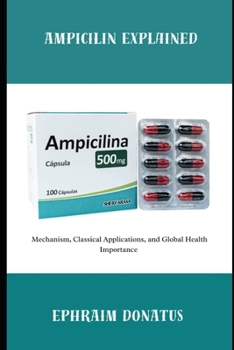
Ampicillin Explained

ew antibiotics have shaped the course of modern medicine as profoundly as Ampicillin.
Since its discovery in the 1960s, this groundbreaking β-lactam antibiotic has saved countless lives and remains an indispensable agent in clinical medicine today.
Ampicillin Explained: Mechanism, Clinical Applications, and Global Health Importance offers a comprehensive and accessible exploration of this vital drug-bridging scientific detail with clinical relevance. Designed for patients, medical students, pharmacists, and clinicians, this guide provides both foundational knowledge and practical insight into how, when, and why ampicillin remains a trusted therapeutic option worldwide.
Inside this book, you'll learn:
How ampicillin works at the molecular level-its mechanism of action and pharmacodynamics
Clinical applications across infections of the respiratory, urinary, gastrointestinal, and central nervous systems
Safety profile and drug interactions, including considerations for pregnancy, pediatrics, and renal impairment
The growing challenge of antimicrobial resistance-and how stewardship can preserve ampicillin's efficacy
Real-world case studies and prescribing scenarios, guiding evidence-based use in modern healthcare
Ampicillin's global health impact, especially in low-resource settings where it remains a life-saving option
With clear explanations, real-life examples, and well-structured chapters, this book serves as:
A learning companion for students of medicine, pharmacy, and nursing
A practical reference for healthcare professionals involved in antibiotic therapy
A trustworthy educational guide for patients seeking to understand safe and effective antibiotic use
Whether you're revising for exams, prescribing in a clinical setting, or simply seeking to understand one of medicine's most enduring antibiotics, Ampicillin Explained is your definitive guide to a drug that continues to define rational antibiotic therapy.
Ampicillin's story is not one of obsolescence-but of endurance.
Its scientific brilliance and continued clinical relevance remind us that medical progress depends as much on wisdom in use as on innovation in discovery.
Customer Reviews
ThriftBooks ® and the ThriftBooks ® logo are registered trademarks of Thrift Books Global, LLC
